
- SUMMARY
- Seborrheic dermatitis
Seborrheic dermatitis
- What is seborrheic dermatitis?
- Seborrheic dermatitis on the torso
- Psoriasis or seborrheic dermatitis?
- Infant seborrheic dermatitis
- Eczema or seborrheic dermatitis?
- Seborrheic dermatitis: scalp and hair loss
- Seborrheic dermatitis of the scalp: causes and treatments
- Seborrheic dermatitis on the face: causes and treatment

Seborrheic dermatitis
Updated on , approved by our DUCRAY medical experts.
Seborrheic dermatitis is a somewhat misunderstood skin condition, but it's fairly common, mainly affecting teenagers and adults. Because the symptoms are visible, it can be a real irritation in everyday life and can seriously disrupt the lives of sufferers. But rest assured: seborrheic dermatitis is not serious and is not contagious.
So what exactly is it? What are the causes? Why does it happen all the time, and what can be done about it? Find the answers to your questions in this dossier.
What is seborrheic dermatitis?
Seborrheic dermatitis is an “ inflammatory ”and “ chronic ”skin condition:
- “ inflammatory ” because the skin is red, as if on high alert. The areas concerned are mainly oily areas, such as the nose, eyebrows and scalp. It is therefore often present on the scalp, the face, or both at the same time.
- “ chronic ” because the disease recurs in cycles. Sometimes, the skin flares up with redness and scales that look like dead skin flakes: this is called the crisis period. Other times, the skin gets better and the symptoms diminish or disappear: this is called the lull period.
In any case, whether it's seborrheic dermatitis of the scalp, seborrheic dermatitis of the face, or both at the same time, seborrheic dermatitis is not a serious condition, and it doesn't lead to complications, whatever your age.
The difficult thing about this skin condition is that it affects daily life so much because of its visible appearance and frequent relapses. It can be recognised by the appearance of erythematous red patches, which can cause severe itching and sometimes provoke a burning sensation. These patches are covered with pieces of dead skin (flakes), which can be greasy and loose.
These visible signs of the condition are enough for your doctor to make a diagnosis. Having a good understanding of what seborrheic dermatitis is will help you know what to do.
Do not confuse it with other skin conditions:
- Certain lesions may look like psoriasis.
- When only the scalp is affected, the flakes may initially be mistaken for simple dandruff.
- In the case of infants under 3 months of age, the condition is known as cradle cap.
What are the different types of dermatitis?
Seborrheic dermatitis affects areas of the body rich in sebaceous glands, in other words oily areas such as the face, scalp and chest. There are two main types of dermatitis:
- seborrheic dermatitis of the scalp.
- seborrheic dermatitis of the face.
Of course, everyone reacts differently: some people have symptoms mainly on the scalp, while others are more affected on the face. The intensity and extent of symptoms can also vary greatly, and even change over time in the same person.
In all cases, it is a visible condition that requires personalised attention.
Seborrheic dermatitis on the face
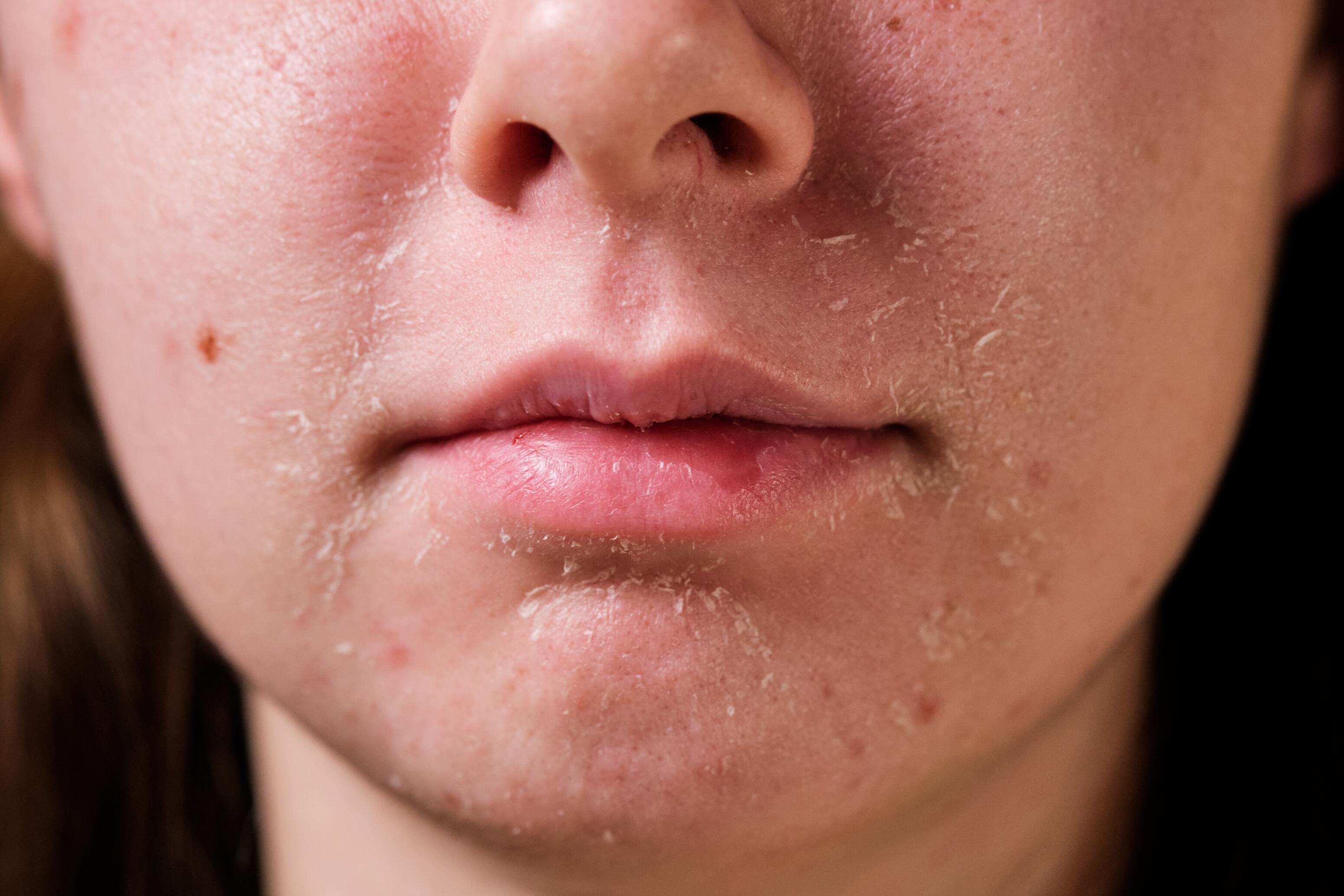
Seborrheic dermatitis of the face has the following characteristic signs:
- In terms of location: it develops in the “ T ” area of the face, which is rich in sebaceous glands. This includes the forehead, eyebrows, the space between the eyebrows, the wings of the nose, the folds around the nose (also known as nasolabial folds) and the chin. It can also spread around the ears, behind or even inside the ear canal.
- In terms of symptoms: at first, slight redness appears with itching. This then turns into red patches or scales covered with thick, yellowish scales. Burning and itching sensations may also accompany these symptoms.
Seborrheic dermatitis of the hair
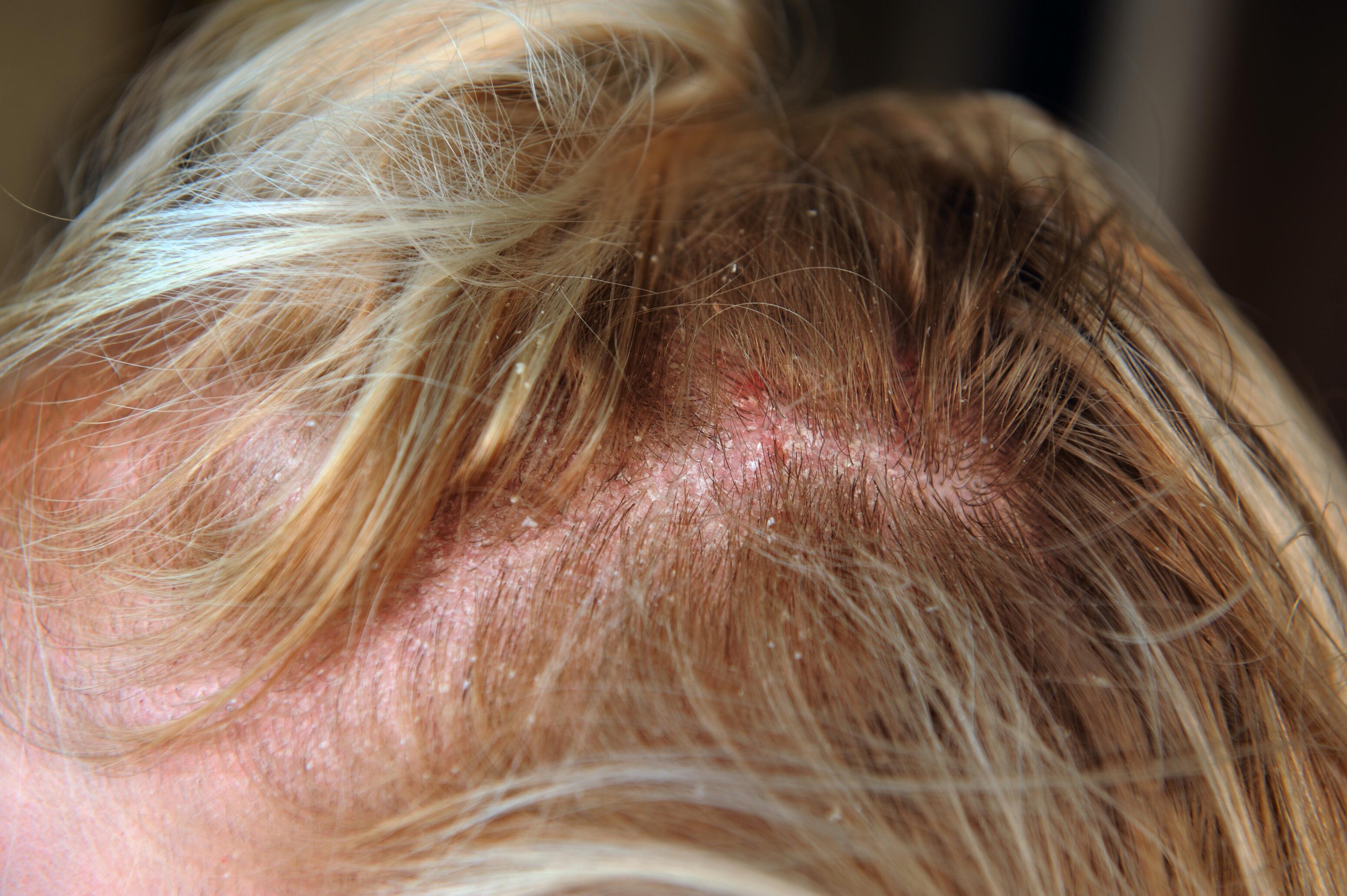
Seborrheic dermatitis of the scalp manifests itself through the following signs:
- In terms of location: it can begin in a specific area of the scalp, such as the temples or the top of the head. But it can also extend to the hairline, even reaching the forehead and neck. In more severe cases, the dermatitis may cover a large area of the head: this is known as “ helmet ” seborrheic dermatitis.
- In terms of symptoms: they resemble dandruff. At first, the small dead skin cells may be fine and white, visible on clothing around the collar or shoulders. But if inflammation increases, they become thicker, more greasy and more yellow, forming scabs on the scalp. The itching becomes very annoying and omnipresent: this is what is medically known as "pruritus". Excessive scratching can cause wounds, sometimes oozing or bleeding.
What causes seborrheic dermatitis?
At present, we do not know with certainty what causes seborrheic dermatitis. However, four main factors have been identified:
- the production of sebum, the oily film on the skin;
- an imbalance in the skin microbiome, with the development of a yeast called Malassezia;
- inflammation;
- impaired skin barrier function.
Sebum is a natural substance present on the surface of the skin in the so-called oily zones. But in people with seborrheic dermatitis, it is produced in excess. This encourages the proliferation of a yeast called Malassezia, which is naturally present on the skin. This yeast releases small fatty acids that irritate the skin, triggering a local inflammatory reaction.
This results in the appearance of red, itchy patches. In addition, the skin's barrier function is weakened and small white or yellowish scales appear on the surface.
Seborrheic dermatitis is also influenced by genetic predisposition and certain conducive factors, such as:
- Environmental factors: cold, heat, humidity, perspiration;
- Alcohol and tobacco consumption;
- Episodes of stress, exhaustion and fatigue;
- An unbalanced diet, nutritional deficiencies...
How is seborrheic dermatitis treated?
Seborrheic dermatitis of the scalp or face cannot yet be completely cured. It is a skin condition that develops in flare-ups, with phases where it improves and others where it comes back unpredictably. Current treatments therefore consist of acting on the symptoms as soon as they appear, to space out recurrences as far as possible:
- by reducing sebum production;
- by limiting the proliferation of Malassezia yeast;
- by reducing inflammation.
For treat seborrheic dermatitis, we use local treatments such as antifungal creams or corticosteroid-based creams. These treatments can take the form of medication or soothing, purifying and anti-inflammatory dermo-cosmetic treatments. In certain severe cases, an oral treatment may be prescribed by the doctor, but this is rare.
Treatment may vary depending on the areas affected and the evolution of the condition. In any case, it is important not to stop treatment too soon, even if you see an improvement, to prevent symptoms returning.
In addition, it is useful to adopt a global approach, taking into account your psychological state and seeking to improve your quality of life (stopping smoking, eating better, managing stress, etc.).
How should I live with seborrheic dermatitis day to day?
Here are a few basic rules to help combat seborrheic dermatitis and prevent flare-ups:
- Use gentle products specifically adapted to the condition for skin and scalp hygiene.
- Pat your skin dry gently, without rubbing, especially in the case of seborrheic dermatitis of the face. For seborrheic dermatitis of the scalp, use a towel rather than a hairdryer.
- Avoid scratching the lesions to avoid aggravating the inflammation.
- Take care of your skin, especially when you're tired or stressed.
- Eat a healthy, balanced diet, avoiding foods that are too rich and processed.
- Reduce your alcohol and tobacco consumption.
- Enjoy the sun in moderation and wear sun protection.
Treatment of the symptoms of seborrheic dermatitis is generally very effective. If you have any doubts or problems following your treatment, don't hesitate to discuss them with your dermatologist, GP or pharmacist to find appropriate solutions.
Sources : (1) Borda LJ, Wikramanayake TC. Seborrheic Dermatitis and Dandruff: A Comprehensive Review. J Clin Investig Dermatol. 2015 Dec; 3.
(2): 10.13188/2373-1044.1000019. Doi : 10.13188/2373-1044.1000019. Epub 2015 Dec 15. PMID: 27148560; PMCID: PMC4852869.
Diagnostic test: Do you have patches, dandruff, redness or itching?
Do you have the following symptoms?
- Patches
- Dandruff
- Redness
- Itching
On the scalp and/or on the face andbody?
Are you wondering what it is? It may be psoriasis, eczema, seborrheic dermatitis of the face or seborrheic dermatitis of the scalp.
Get a “Patches, dandruff, redness and/or itching?” diagnosis in just a few clicks to discover our advice and recommendations for suitable skincare routines.

Ducray's specialised range for skin prone to seborrheic dermatitis
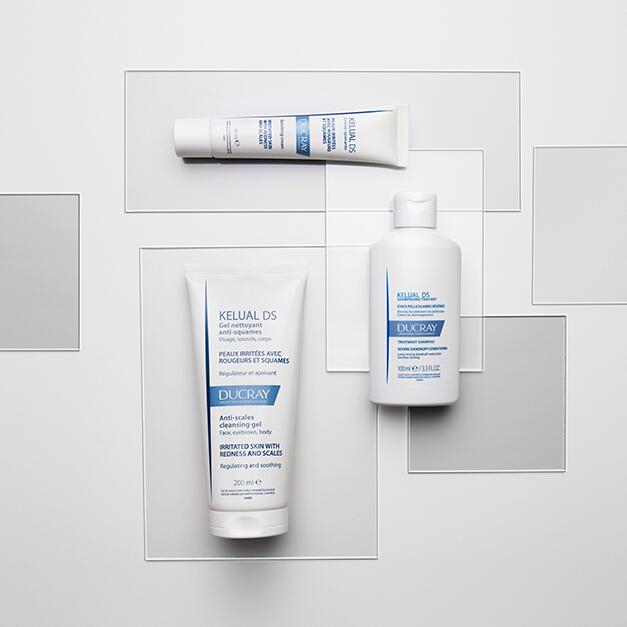
Discover The KELUAL DS range, developed to provide support for skin and scalps prone to seborrheic dermatitis.
Our skincare routines
Irritated skin with redness and flakiness