

Anti-redness & flakes DS face and body
Is your skin irritated and flaky?
How is seborrheic dermatitis treated?

Updated on , approved by our DUCRAY medical experts.
Once your doctor has clearly identified the extent and location of the symptoms, he or she can then suggest the most appropriate treatment for seborrheic dermatitis.
There are several options, ranging from prescription drugs to dermo-cosmetic treatments. The key is to find what works best for you.
So what medicines are generally recommended for treating seborrheic dermatitis of the face or scalp? Can dermo-cosmetic treatments be enough to relieve symptoms? Are there any natural treatments?
Overview of current " seborrheic dermatitis ” treatments.
The treatment of seborrheic dermatitis has three main objectives:
All seborrheic dermatitis treatments are highly effective against the symptoms, i.e. during the flare-up phase.
However, to date, there is no treatment that can provide a definitive cure for seborrheic dermatitis. This condition is chronic and recurrent with near-invariable relapses, and treatments are therefore repeated whenever necessary.
The chronic nature of seborrheic dermatitis means that patients have to learn to live with it. It's a bit like becoming a detective: you have to be able to spot the signs of a flare-up, intervene at the right time and use the right tools.
There are several ways of treating seborrheic dermatitis. When a medicated treatment is introduced, it is essential to have dermo-cosmetic support to prevent symptoms from returning too quickly. These same dermo-cosmetics can sometimes be sufficient on their own, depending on the severity and location of the condition.
Seborrheic dermatitis can be treated in different ways, depending on where the symptoms appear:
If the seborrheic dermatitis is severe or resistant to treatment, oral antifungal (yeast-fighting) and anti-inflammatory (inflammation-fighting) medication will be preferred.
Several families of medicines are available:
Antifungals are often the first choice for treating seborrheic dermatitis. They are used:
They act locally by reducing the concentration of yeasts of the genus Malassezia on the skin. There are two main classes of antifungal agents:
Dermocorticoids are cortisone-based creams used for their anti-inflammatory properties on the skin: a bit like firefighters, they quickly extinguish the " fire ” on the skin. They are applied in a thin layer using gentle massage to help penetration.
They are often prescribed as an adjunct to antifungal treatment. In a short time, they calm inflammation and redness and reduce itching.
Calcineurin is like a switch that turns on the cells responsible for inflammation. These drugs, known as calcineurin inhibitors, act by blocking this switch: they deactivate part of the immune system responsible for inflammation, thereby preventing activation of the inflammatory mechanism.
This targeted treatment is often used when cortisone-based creams are not enough. Tacrolimus and pimecrolimus are common examples.
Lithium gluconate is also prescribed for its anti-inflammatory action and is also thought to have an effect on Malassezia yeasts. In other words, as a basic treatment, it prevents the spread of the condition and acts more as an inflammation regulator on the skin.
When seborrheic dermatitis is diagnosed, it must be treated everywhere it occurs.
Depending on the area concerned, face or scalp, seborrheic dermatitis treatments will be adapted to make them easier to use and apply correctly.
Treatments for seborrheic dermatitis of the face are adapted according to the severity of the symptoms:
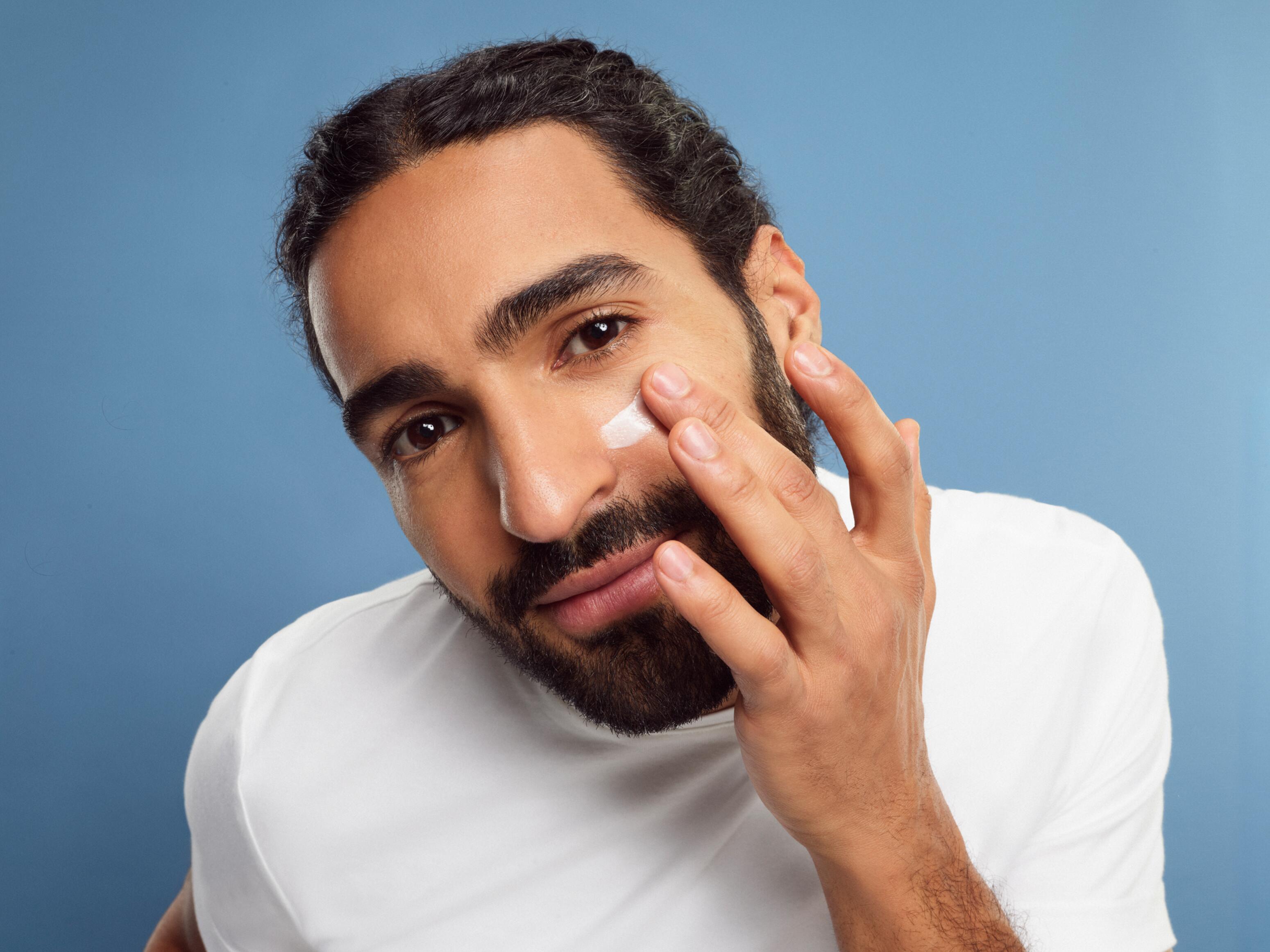
If treatment of a moderate to severe case fails or is resistant, other treatments may be considered (longer corticosteroid therapy, ultraviolet light, etc.).
Seborrheic dermatitis is a scalp condition that causes red patches and dandruff and can be soothed with a variety of treatments, mainly in the form of shampoos:
For those who prefer natural solutions, phytotherapy offers alternatives. Plant extracts such as cannabidiol(1) or glycyrrhetinic acid(2) have been shown to be effective in treating this scalp condition. In addition, certain essential oils such as palmarosa essential oil or tea tree essential oil may be recommended (3).
In addition to medical treatments for seborrheic dermatitis, there are a number of dermo-cosmetic treatments available in pharmacies. They provide invaluable support and are sometimes even enough on their own.
These treatments generally consist of:
Recent studies also suggest that strengthening the skin's protective barrier can help in the treatment of seborrheic dermatitis. In practice, this means it is important to use products that hydrate the skin (called emollients), attract water (humectants) and help repair this natural barrier. These products can effectively complement standard treatments and improve results. (4).
This advice, combined with the prescribed medical treatment, can help optimise the effectiveness of the treatment and improve the skin of people with seborrheic dermatitis (5).
Finally, don't forget that stress, cold winters, alcohol and smoking can make seborrheic dermatitis worse. Taking care of yourself in these ways is essential if you are to manage your condition more effectively.
Sources :
(1) Vincenzi C, Tosti A. Efficacy and Tolerability of a Shampoo Containing Broad-Spectrum Cannabidiol in the Treatment of Scalp Inflammation in Patients with Mild to Moderate Scalp Psoriasis or Seborrheic Dermatitis. Skin Appendage Disord. 2020 Nov;6(6):355-361. doi: 10.1159/000510896. Epub 2020 Oct 19. PMID: 33313051; PMCID: PMC7706496.
(2) Mathilde Bouriquat. La réglisse : principales propriétés et utilisations. Sciences du Vivant [q-bio]. 2020. ffdumas-03027311f
(3) Le guide terre vivante des huiles essentielles, Dr françoise Couic Marinier et Dr Anthony Touboul, Septembre 2020
(4) Rousel J, Nădăban A, Saghari M, Pagan L, Zhuparris A, Theelen B, Gambrah T, van der Wall HEC, Vreeken RJ, Feiss GL, Niemeyer-van der Kolk T, Burggraaf J, van Doorn MBA, Bouwstra JA, Rissmann R. Lesional skin of seborrheic dermatitis patients is characterized by skin barrier dysfunction and correlating alterations in the stratum corneum ceramide composition. Exp Dermatol. 2024 Jan;33(1):e14952. doi: 10.1111/exd.14952. Epub 2023 Nov 16. PMID: 37974545.
(5) Thomas Bernard. La dermite séborrhéique : revue de la littérature d’une pathologie de médecine générale. Médecine humaine et pathologie. 2021. ffdumas-03451572f
Discover our complete range

KELUAL DS ORIGINAL
Anti-dandruff treatment shampoo
KELUAL DS
Anti-scales cleansing gelIrritated skin with redness and flakiness