
Body eczema: hands, feet, arms, back, face, etc
- SUMMARY
- Eczema
Eczema on the legs or varicose eczema?
- Living with eczema day to day
- Swimming pool, swimming when you have eczema?
- Eczema: What daily reflexes should you adopt?
- Eczema: what food should you eat?
- What are the habits to avoid when you have eczema?
- Eczema: can it be cured?
- Which detergent should eczema patients use?
- Eczema: how can flare-ups be avoided?
- What soap should be used for eczema?
- Eczema: how to treat itching
- Eczema cream, ointment: what should you use?
- Body eczema: hands, feet, arms, back, face, etc
- Eczema on the back
- Eczema of the legs or varicose eczema
- Eczema around the mouth
- Facial eczema
- Eczema in the ears
- Foot eczema
- Eczema on the stomach and belly button
- Arm eczema (elbows, armpits, forearms)
- Eczema on the neck and nape of the neck
- Eczema of the eyelids, eyes or palpebral eczema
- Hand and finger eczema (chronic hand eczema)
- Scalp eczema
- Baby’s eczema, infant eczema: what is it?
- When should you consult a physician about your baby's eczema?
- What soap should be used for babies with eczema?
- Eczema in babies and children: the areas most often affected
- Which cream should you use for baby's eczema?
- Eczema in babies: what habits should you adopt?
- How should you treat baby’s and infant’s eczema?

Eczema on the legs or varicose eczema?
Updated on , approved by our DUCRAY medical experts.
Do you notice itchy red patches on your legs? It may be eczema of the legs. But beware: red patches on the legs can also be a symptom of other illnesses. So how can leg eczema be distinguished from other conditions, and above all, what can be done to treat it effectively? Find out more in this article.
Eczema on the legs: definition
Eczema on the legs is a generic term for an inflammatory skin condition characterised by redness, dry skin with small scales on the surface, itching of varying intensity and sometimes localised swelling.
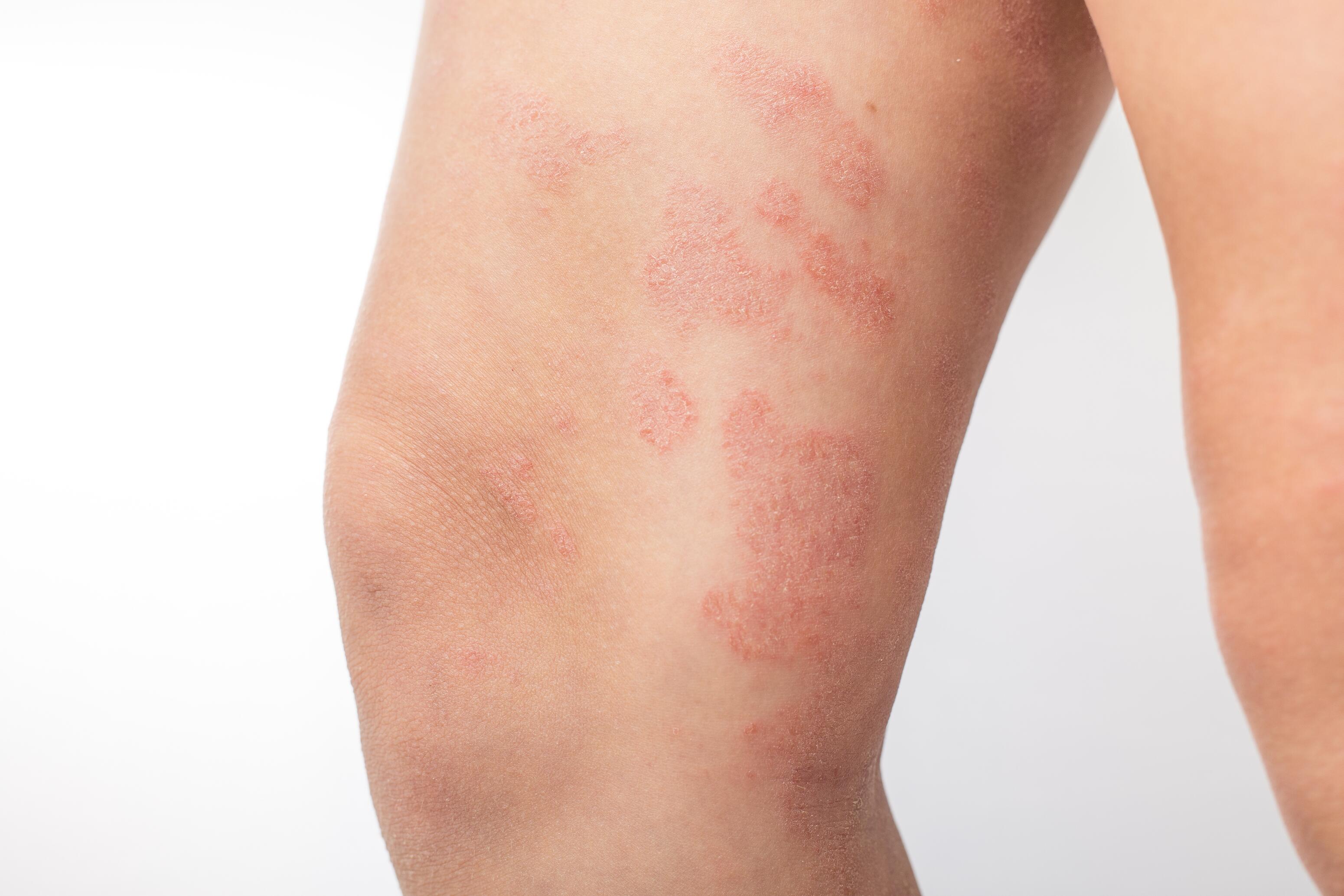
In reality, there are different forms of eczema:
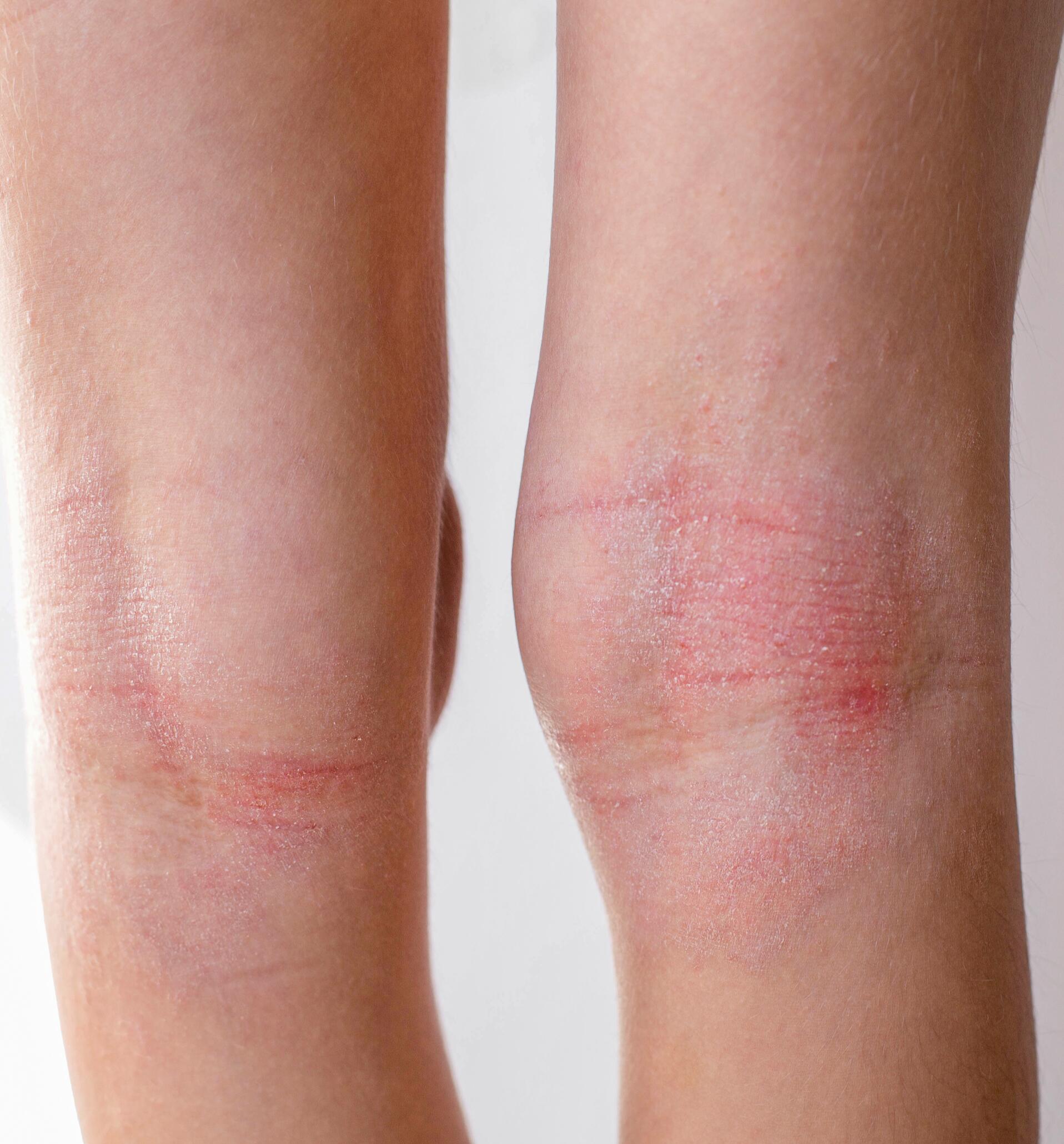
- It can be what is known as “atopic ", eczema. i.e. linked to a hereditary background that makes the skin more sensitive to environmental factors. In general, the affected area is located in the folds at the back of the knees.
- This may correspond to allergic or irritant contact eczema. The body's defence system overreacts.
- It can also be varicose eczema, which is a very specific form of eczema. Also known as stasis dermatitis, this eczema appears mainly as a result of venous insufficiency, i.e. circulatory problems. Around 37-44% of people with leg ulcers may also have varicose eczema(1).
Symptoms of leg eczema
The main symptoms of leg eczema are red patches, intense itching, dry skin and sometimes thickening of the skin. However, a distinction must be made between atopic eczema and varicose eczema.
- Atopic eczema of the legs is often observed in childhood or in young adults with an allergic background. It manifests itself as red or pink patches, mainly in the folds (such as behind the knees), accompanied by severe dryness and very sensitive, thin skin that itches intensely during inflammatory flare-ups. Unlike varicose eczema, atopic eczema generally does not lead to significant swelling or complications such as ulcers.
- Varicose eczema is characterised by red patches, dry skin and intense itching. But over time, the skin can become thick, rough and scaly, with the possible formation of small blisters (vesicles) that ooze out before forming scabs. This form of eczema is also often accompanied by swelling (oedema) of the legs, which can cause feelings of heaviness or burning and make walking or wearing clothes uncomfortable. If left untreated, it can develop into a venous ulcer. Persistent itching and pain can also affect sleep quality and lead to anxiety or depression.
If in doubt or if symptoms persist, it is strongly recommended that you consult a healthcare professional to establish a precise diagnosis and receive appropriate treatment.
Causes of varicose eczema
Varicose eczema (or venous eczema) occurs when blood circulation in the veins of the legs is somehow blocked or insufficient. Blood has difficulty flowing back to the heart, leading to stagnation in the veins of the legs.
This stagnation of blood in the legs causes an increase in venous pressure, leading to inflammation and fluid leakage into the skin tissues: red patches appear accompanied by itching.
Eczema on the legs: not to be confused with other conditions
Red patches on the leg can be caused by a number of conditions. Some are serious and/or require rapid treatment. A red patch on the leg may, for example, reveal deep vein thrombosis (or phlebitis) or erysipelas (a bacterial infection of the skin).
Varicose eczema often starts on the lower legs. Eczema on the thigh is rarely associated with varicose eczema, or only at a later stage.
It is possible to have both eczema on the arms, eczema on the legs and other patches of eczema on the skin. In this case, venous insufficiency is rarely the cause - it may be a case of atopic eczema.
Red patches on the legs can also be caused by contact eczema following the application of a product or dressing to the legs.
Eczema on the legs: what treatment?
The treatment of varicose eczema on the legs involves treating venous insufficiency: wearing compression stockings, elevating the legs and, if necessary, undergoing surgery.
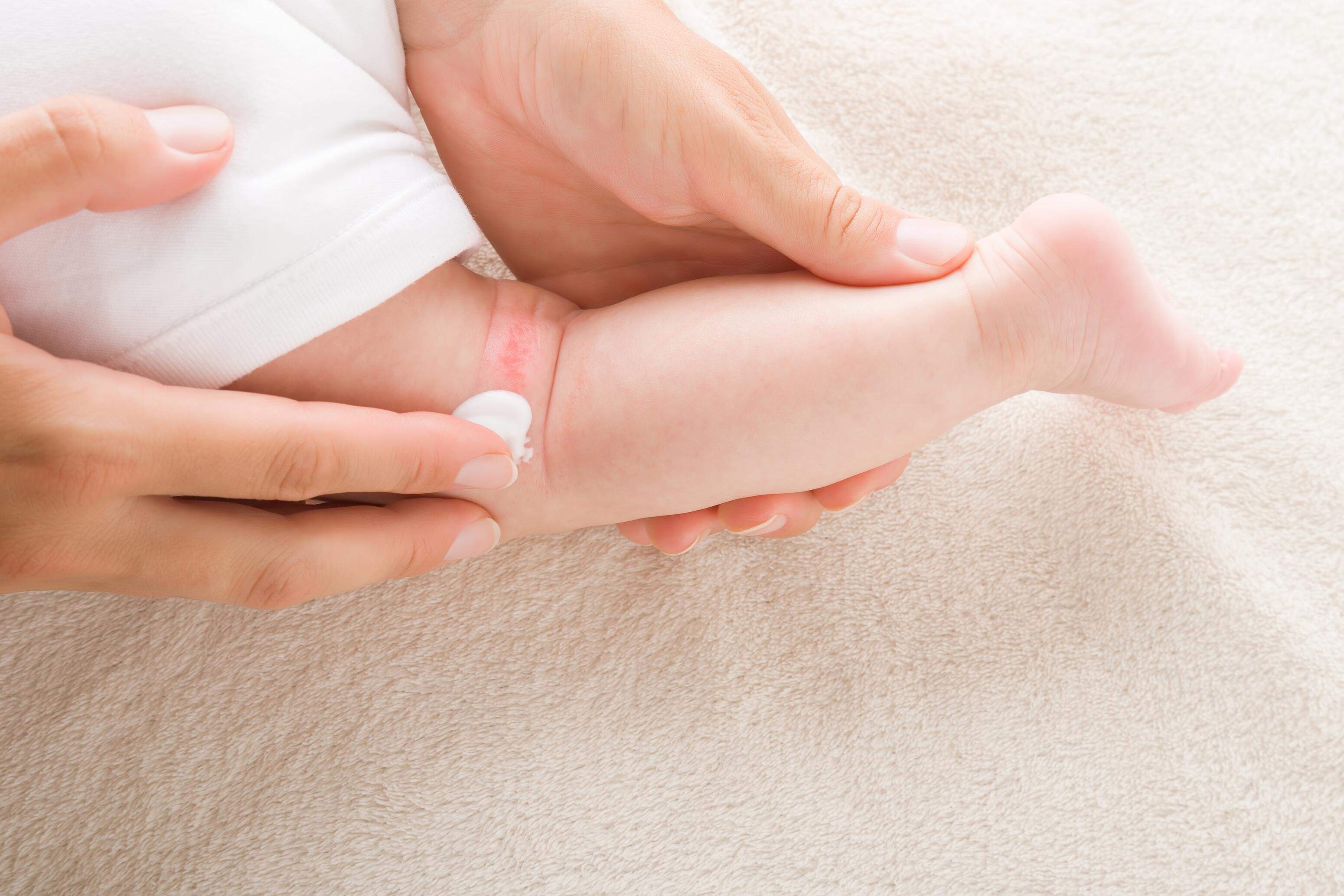
For local relief, whatever the form of leg eczema (atopic, contact or varicose), the doctor prescribes cortisone creams and emollients to be applied daily.
For confirmed cases of contact eczema, avoiding the allergens involved will be essential to prevent any recurrence or establishment of lesions.
Source :
(1) Payne D. Venous eczema: more than just a rash. Br J Community Nurs. 2023 Jun 2;28(6):298-300. doi: 10.12968/bjcn.2023.28.6.298. PMID: 37261990.
Read also
Body eczema: hands, feet, arms, back, face, etc
Eczema of the eyelids, eyes or palpebral eczema
Body eczema: hands, feet, arms, back, face, etc
Hand and finger eczema (chronic hand eczema)
Our targeted solutions for eczema
Discover our complete range.
- Anti-scratching emollient balm
DEXYANE
Anti-scratching emollient balmNourishes - Soothes - Repairs - Strengthens the skin barrier


Our skin care routines
Atopic eczema, contact eczema, chronic eczema, eyelid eczema
- Discover Face and body contact eczema
Face and body contact eczema
Does your skin react to certain items like costume jewellery, makeup, cleaning products or the frames of your glasses?
- Discover Atopic eczema on the face and body
Atopic eczema on the face and body
Do you experience itching sensations, irritation or dryness on your body or face?
- Discover Anti-scratching body
Anti-scratching body
Is your skin severely dehydrated? Does your skin feel itchy or irritated?