
Seborrheic dermatitis and daily life
- SUMMARY
- Seborrheic dermatitis
Essential oils and seborrheic dermatitis: do they work?
- What is seborrheic dermatitis?
- Seborrheic dermatitis on the torso
- Psoriasis or seborrheic dermatitis?
- Eczema or seborrheic dermatitis?
- Infant seborrheic dermatitis
- Seborrheic dermatitis on the face: causes and treatment
- Seborrheic dermatitis of the scalp: causes and treatments
- Seborrheic dermatitis: scalp and hair loss

Essential oils and seborrheic dermatitis: do they work?
Updated on , approved by our DUCRAY medical experts.
Certain essential oils for seborrheic dermatitis, particularly when it affects the scalp, can be recommended to combat symptoms, as a complement to treatment. They are not, of course, a substitute for medicinal treatments, but can offer additional benefits depending on the user.
Find out all the latest information in this article.
How do essential oils act on our skin?
Certain essential oils may help to combat seborrheic dermatitis thanks to their antifungal, moisturising and soothing properties.
However, although they are natural, they must be used with care, as they are not without risk. Especially as skin affected by seborrheic dermatitis is fragile. This is why, in the case of seborrheic dermatitis, the essential oils chosen must be appropriate and always diluted in a vegetable oil before application.
Can I apply essential oils to my skin if I have seborrheic dermatitis?
A few precautions should be taken before using essential oils on skin prone to seborrheic dermatitis:
- First of all, essential oils must not be applied on young children or pregnant women.
- They should be applied locally, diluted in a vegetable oil.
- Do an elbow fold test before using for the first time to check you are not allergic.
- Avoid mucous membranes, ears and eyes.
- After application, do not expose yourself to the sun due to risk of solar erythema or even an allergic skin reaction.
- Finally, not all essential oils are suitable for seborrheic dermatitis; each oil has its own specific characteristics.
As you can see, essential oils should be used with caution, particularly on fragile skin that suffers from seborrheic dermatitis. Consult a doctor or pharmacist for personalised advice.
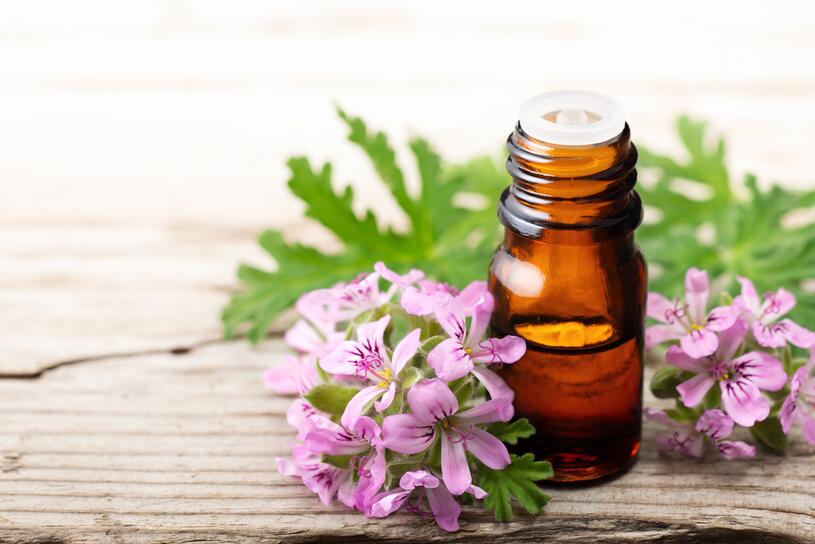
The use of essential oil for seborrheic dermatitis of the scalp
Seborrheic dermatitis of the scalp, identified by dandruff and itching, is often linked to yeasts such as Malassezia.
Essential oils for seborrheic dermatitis of the scalp are increasingly preferred (1) by patients because of their effectiveness: tea tree (2), rose geranium and palmarosa essential oils are recognised for their antimicrobial properties.
Before use, consult a health professional specialising in aromatherapy.
Essential oils against seborrheic verrucas
Seborrheic dermatitis and seborrheic verrucas are two different skin conditions:
- Seborrheic dermatitis is characterised by red, scaly patches.
- A seborrheic verruca is a benign growth generally found on the face, back and chest, especially in people over the age of 40.
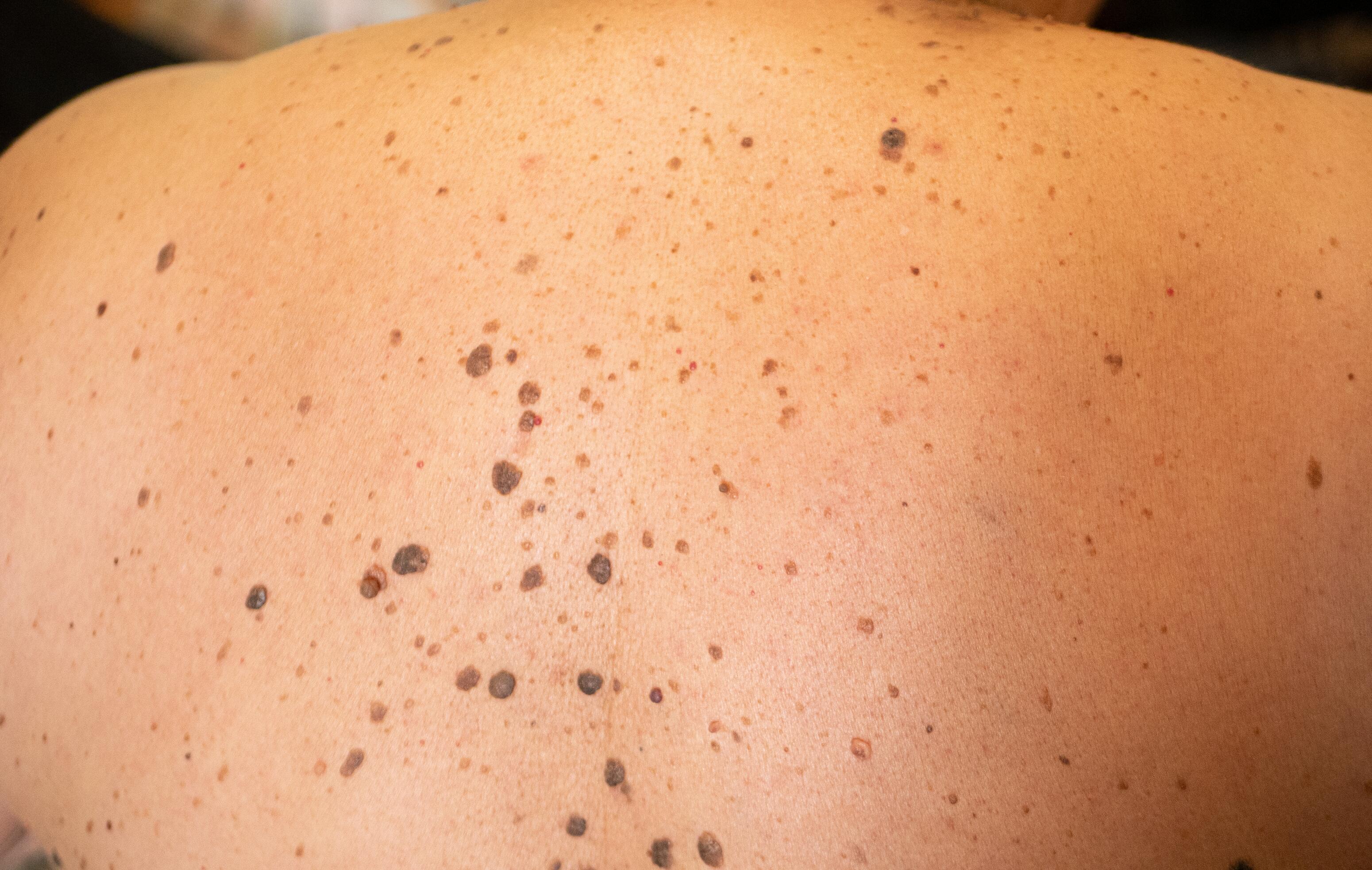
Seborrheic verrucas are not viral. The combination of seborrheic verrucas and essential oils with antimicrobial properties will therefore not be effective. Seborrheic verrucas are generally removed either by cryotherapy or electrocoagulation.
Before treating seborrheic verrucas with essential oils, it is therefore advisable to consult a health professional specialising in aromatherapy to choose an appropriate treatment.
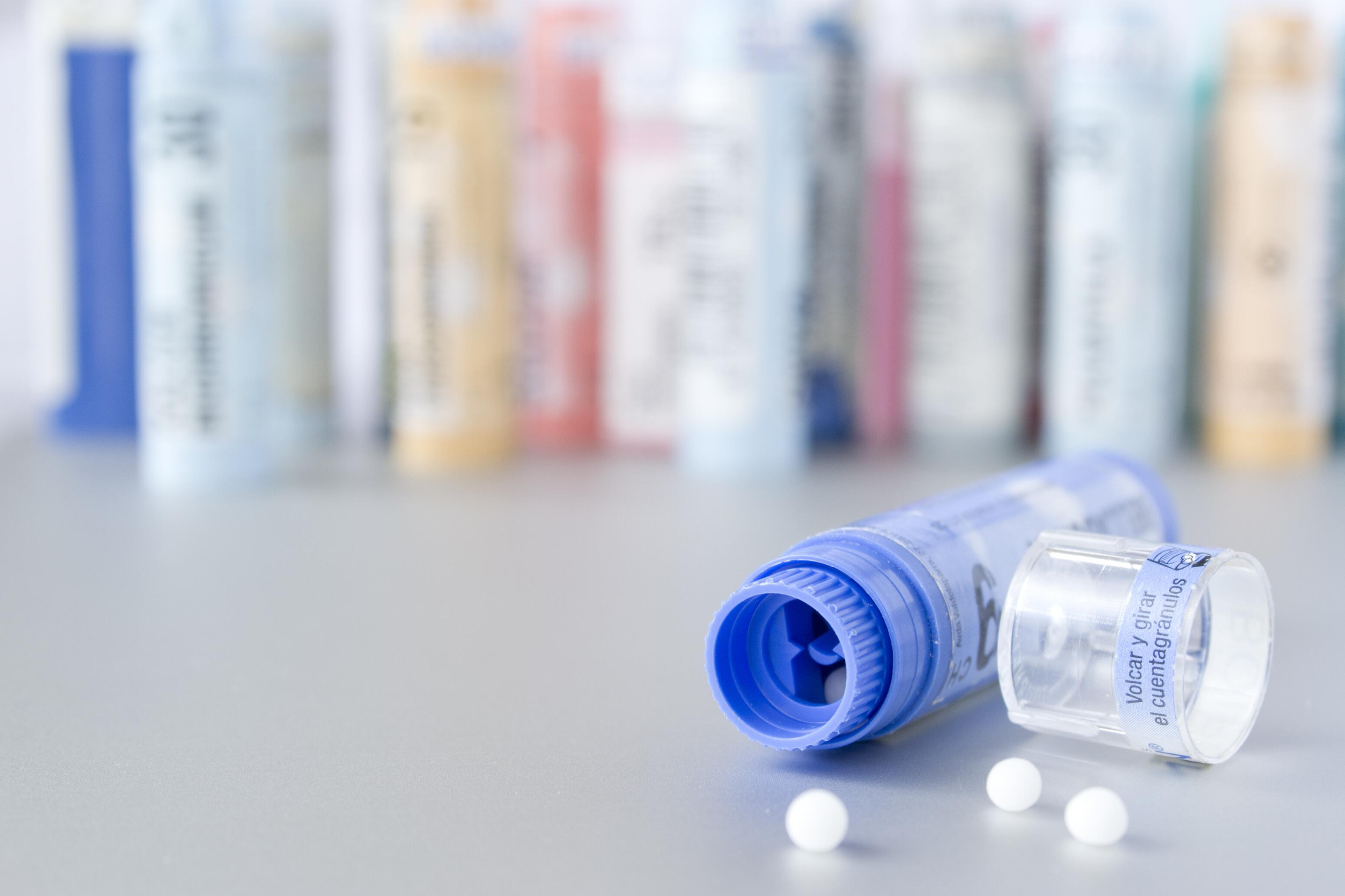
What about homeopathy for seborrheic dermatitis?
Homeopathy is often debated as to its effectiveness for the treatment of various ailments. So, what about seborrheic dermatitis and homeopathy?
Studies suggest that certain low-dose homeopathic treatments, such as potassium bromide, sodium bromide, nickel sulphate and sodium chloride, may relieve seborrheic dermatitis and chronic dandruff (3). However, further research is needed to confirm these results. It is therefore advisable to consult healthcare professionals trained in homeopathy, who have experience in the field and positive feedback from patients, for appropriate support.
Sources :
(1) Jain S, Arora P, Nainwal LM. Essential Oils as Potential Source of Anti-dandruff Agents: A Review. Comb Chem High Throughput Screen. 2022 Jul 27;25(9):1411-1426. doi: 10.2174/1386207324666210712094148. PMID: 34254910.
(2) Pazyar N, Yaghoobi R, Bagherani N, Kazerouni A. A review of applications of tea tree oil in dermatology. Int J Dermatol. 2013 Jul;52(7):784-90. doi: 10.1111/j.1365-4632.2012.05654.x. Epub 2012 Sep 24. PMID: 22998411.
(3) Smith SA, Baker AE, Williams JH. Effective treatment of seborrheic dermatitis using a low dose, oral homeopathic medication consisting of potassium bromide, sodium bromide, nickel sulfate, and sodium chloride in a double-blind, placebo-controlled study. Altern Med Rev. 2002 Feb;7(1):59-67. PMID: 11896746.
Read also
- Discover Seborrheic dermatitis and diet
Seborrheic dermatitis and daily life
Seborrheic dermatitis and diet
- Discover Seborrheic dermatitis: environmental factors, pollution, sun, etc.
Seborrheic dermatitis and daily life
Seborrheic dermatitis: environmental factors, pollution, sun, etc.
- Discover Is seborrheic dermatitis contagious?
Seborrheic dermatitis and daily life
Is seborrheic dermatitis contagious?
Our targeted solutions for seborrheic dermatitis
Discover our complete range
- Anti-dandruff treatment shampoo
KELUAL DS ORIGINAL
Anti-dandruff treatment shampooEliminates severe dandruff - Eliminates dandruff after the first application* - Soothes itchiness* - Limits recurrences - Anti-scales cleansing gel
KELUAL DS
Anti-scales cleansing gelPurifies - Removes flakes - Soothes - Reduces redness


Our skincare routines
Irritated skin with redness and flakiness