
How is seborrheic dermatitis treated?
- SUMMARY
- Seborrheic dermatitis
Which shampoo should you use for seborrheic dermatitis?
- What is seborrheic dermatitis?
- Seborrheic dermatitis on the torso
- Psoriasis or seborrheic dermatitis?
- Eczema or seborrheic dermatitis?
- Infant seborrheic dermatitis
- Seborrheic dermatitis on the face: causes and treatment
- Seborrheic dermatitis of the scalp: causes and treatments
- Seborrheic dermatitis: scalp and hair loss

Which shampoo should you use for seborrheic dermatitis?
Updated on , approved by our DUCRAY medical experts.
In adults and children 12 and older, seborrheic dermatitis of the scalp is addressed with a treatment shampoo.
Dermo-cosmetic shampoos should always be used in conjunction with medical treatments to reduce the risk of relapse. But in some cases, dermocosmetic treatments alone can have an effect on seborrheic dermatitis. Your doctor will make the choice based on the severity of your condition and the associated symptoms.
Medicated shampoos and seborrheic dermatitis
Medicated treatment shampoos will usually work against yeast such as Malassezia by limiting its growth and reducing symptoms with anti-inflammatory action. Using these shampoos is therefore important in the treatment of seborrheic dermatitis:
- Ketoconazole-based shampoos (1.2,3) are the first-line treatment for seborrheic dermatitis of the scalp. They are applied twice a week for two to four weeks. Their mechanism of action is based on their antifungal and anti-inflammatory action. Occasional undesirable effects may be experienced with this treatment, such as irritation, pruritus (or itching), contact eczema or, very rarely, a change in the colour of grey or tinted hair, though they are fortunately very rare.
- Miconazole nitrate shampoos (4) work similarly to ketoconazole-based shampoos and their dosage is identical.
- Ciclopiroxolamine-based shampoos (4.5) are applied two or three times a week for four weeks. They have an antifungal and anti-inflammatory action. They are as effective as ketoconazole.
- Selenium disulphide-based shampoos (6) act both by reducing the proliferation of cells and therefore dandruff and by reducing the growth of Malassezia yeast. Compared with ketoconazole, selenium disulphide appears to be slightly less effective and less well tolerated, with irritation and dryness as the main side-effects. Apply twice a week for a fortnight, then once a week.
Dermocosmetic treatment shampoos and seborrheic dermatitis
There are also a number of dermocosmetic treatment shampoos available from chemists. It's easy to find the Ducray ranges: they’re called D.S. Shampoo, which stands for Dermite Séborrhéique (Seborrheic Dermatitis) Shampoo. These Seborrheic Dermatitis shampoos combine:
- keratolytic action, to eliminate scales.
- antifungal action, to limit the proliferation of yeast of the genus Malassezia.
- anti-inflammatory action, to soothe irritated scalp, reduce redness and calm itching.
How often you use these Seborrheic Dermatitis shampoos is much the same as so-called " medicated ” shampoos, two to three times a week. As soon as the condition improves, we recommend that you use them less frequently in order to maintain the effects over time. To apply it, gently massage it into the scalp and leave it in for the time indicated.
Organic and natural shampoos and home remedies
Many people suffering from seborrheic dermatitis are interested in organic, natural Seborrheic Dermatitis shampoos or “ home ” remedies. They may hope to find a solution that really works without having to rely on prescriptions. But medical experts warn that these alternatives come with risks of irritation and allergic reactions. So, even if these solutions seem attractive, it is important to seek the advice of a health professional.
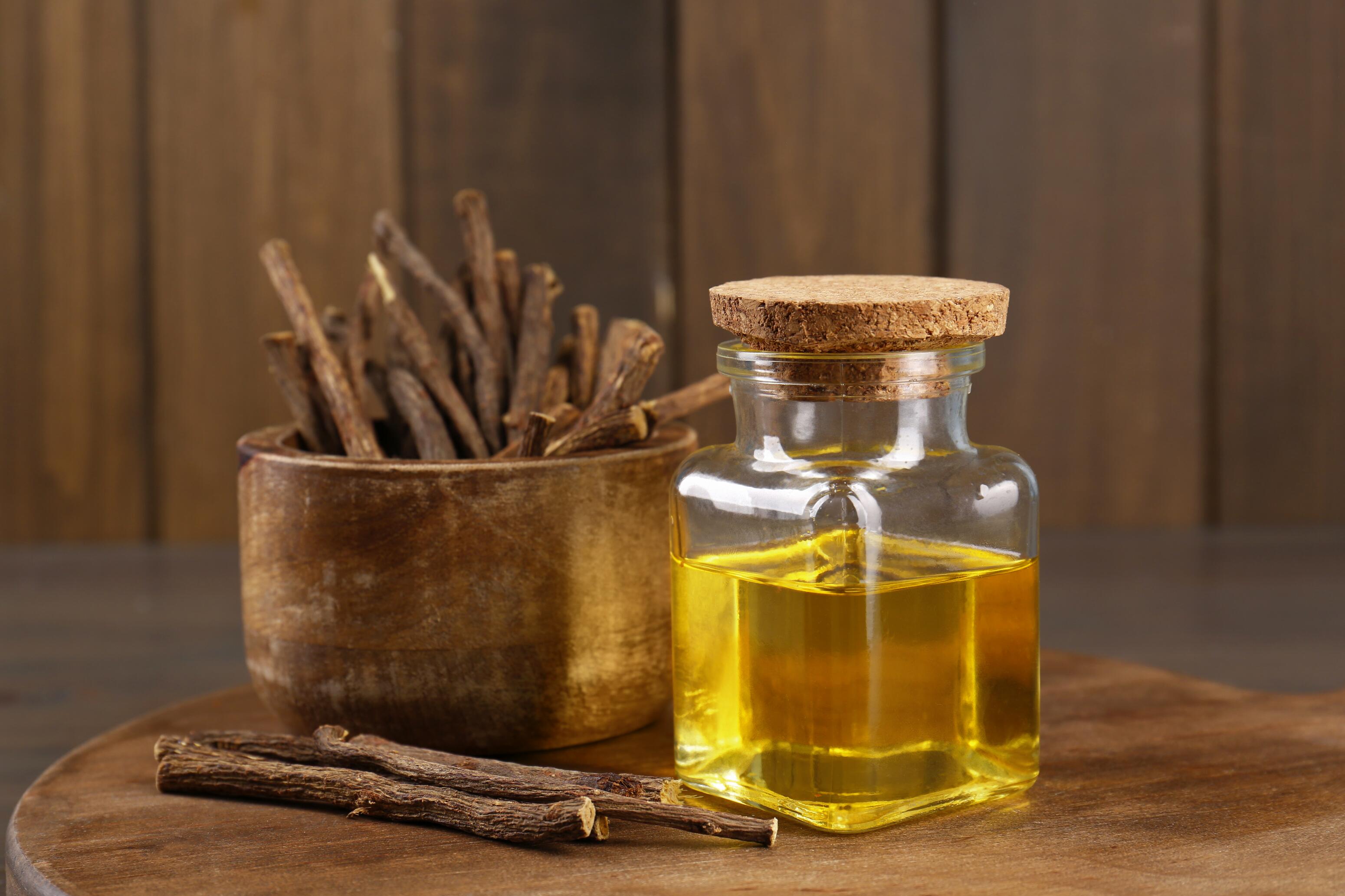
In all cases, it is strongly recommended to use shampoos that have been subjected to tolerance and efficacy studies: those containing active ingredients derived from plants, such as glycyrrhetinic acid, for example, a molecule naturally present in liquorice root, have been shown to be well tolerated and highly effective in treating seborrheic dermatitis of the scalp(7).
Sulphate-free seborrheic dermatitis shampoo
Sulphate-free D.S. (for Dermite Seborrhéique, or Seborrheic Dermatitis) shampoos, unlike traditional shampoos, use gentle cleansing agents that may be better suited to fragile scalps. With an equivalent concentration of antifungal active ingredient such as piroctone olamine, a sulphate-free shampoo for Seborrheic Dermatitis retains all its effectiveness(8).
Sulphate-free shampoos can therefore be an interesting option for people suffering from seborrheic dermatitis, offering a gentler treatment for the hair and scalp, provided that the concentration of antifungal and anti-inflammatory active ingredients is sufficient to guarantee their efficacy.
Criteria for choosing a shampoo
3 criteria are important to consider when choosing your shampoo for seborrheic dermatitis:
- Check that the shampoo is specifically formulated for seborrheic dermatitis.
- Always read labels carefully: opt for ingredients that are known and recognised for their scientifically proven effectiveness, such as selenium sulphide, ketoconazole, ciclopiroxolamine or piroctone olamine.
- Ask healthcare professionals for feedback from their patients: they'll tell you which shampoos are best and most effective for seborrheic dermatitis.
On the other hand, shampoos that do not specify the specific conditions they treat, that contain irritating or unnecessary ingredients (such as dyes), or that do not mention efficacy or tolerance studies specifically carried out on people with seborrheic dermatitis of the scalp should be avoided.
A few simple tips from our experts to follow on a daily basis
In the case of seborrheic dermatitis of the scalp, the scalp is irritated. When the frequency of shampoos is greater than the dosage of the treatment shampoo, we recommend that you alternate the use of treatment shampoos with gentle, soothing shampoos. Do not hesitate to ask your pharmacist for advice.
To limit any risk of scalp irritation, use of styling products such as hairsprays or gels is not recommended.
Sources :
(1)Faergemann J, Borgers M, et al. A new ketocona- zole topical gel formulation in seborrhoeic dermatitis: An updated review of the mechanism. Expert Opin Pharmacother 2007;8:1365-71.
(2)Elewski BE, Abramovits W, et al. A novel foam for- mulation of ketoconazole 2% for the treatment of se- borrheic dermatitis on multiple body regions. J Drugs Dermatol 2007;6:1001-8.
(3)Elewski B, Ling MR, et al. Efficacy and safety of a new once-daily topical ketoconazole 2% gel in the treatment of seborrheic dermatitis: A phase III trial. J Drugs Dermatol 2006;5:646-50.
(4)Subissi A, Monti D, et al. Ciclopirox: Recent non- clinical and clinical data relevant to its use as a topical antimycotic agent. Drugs 2010;70:2133-52.
(5)Ratnavel RC, Squire RA, et al. Clinical efficacies of shampoos containing ciclopirox olamine (1.5%) and ketoconazole (2%) in the treatment of seborrhoeic dermatitis. J Dermatolog Treat 2007;18:88-96.
(6)Danby FW, Maddin WS, et al. A randomized, double-blind, placebo-controlled trial of ketoconazole 2% shampoo versus selenium sulfide 2.5% shampoo in the treatment of moderate to severe dandruff. J Am Acad Dermatol 1993;29:1008-12.
(7)Wang HC, Wang CS, Hsieh SC, Hung YT, Chen HH. Evaluation of a new-formula shampoo containing 6% glycyrrhetinic acid complex for scalp seborrheic dermatitis: A pilot study. J Cosmet Dermatol. 2022 Aug;21(8):3423-3430. doi: 10.1111/jocd.14623. Epub 2021 Nov 18. PMID: 34792270; PMCID: PMC9542316.
(8)Reygagne P, Piérard GE, Loussouarn G, Le Nôtre N, Ziane S. Comment je traite … un état pelliculaire par un shampoing à base lavante «sulfate-free» [How I treat … dandruff using a shampoo with a sulfate-free tensio-active]. Rev Med Liege. 2016 Sep;71(9):365-370. French. PMID: 28383830.
Read also
- Discover Medicinal treatments to fight seborrheic dermatitis
How is seborrheic dermatitis treated?
Medicinal treatments to fight seborrheic dermatitis
Our targeted solutions for seborrheic dermatitis
Discover our complete range
- Anti-dandruff treatment shampoo
KELUAL DS ORIGINAL
Anti-dandruff treatment shampooEliminates severe dandruff - Eliminates dandruff after the first application* - Soothes itchiness* - Limits recurrences - Anti-scales cleansing gel
KELUAL DS
Anti-scales cleansing gelPurifies - Removes flakes - Soothes - Reduces redness


Our skincare routines
Irritated skin with redness and flakiness