
What is seborrheic dermatitis?
- SUMMARY
- Seborrheic dermatitis
Seborrheic dermatitis of the scalp: causes and treatments
- What is seborrheic dermatitis?
- Seborrheic dermatitis on the torso
- Psoriasis or seborrheic dermatitis?
- Infant seborrheic dermatitis
- Eczema or seborrheic dermatitis?
- Seborrheic dermatitis: scalp and hair loss
- Seborrheic dermatitis of the scalp: causes and treatments
- Seborrheic dermatitis on the face: causes and treatment

Seborrheic dermatitis of the scalp: causes and treatments
Updated on , approved by our DUCRAY medical experts.
Seborrheic dermatitis of the scalp is the most common form of dermatitis.
The scalp is affected in over 80%(1) of cases of seborrheic dermatitis.
What’s the best way to recognise it and not confuse it with other scalp conditions such as psoriasis or eczema? Is there a link between seborrheic dermatitis of the scalp and hair loss? In this article, we’ll take a look at the most important answers to this question.
Symptoms and diagnosis of seborrheic dermatitis of the scalp
Depending on the severity of the condition, the following may be observed:
- simple dandruff in the mildest forms.
- greasy, yellowish dandruff related to excess sebum (hyper-seborrhoea) and reddening of the skin (erythema).
Lesions can appear all over the scalp, but are most often found at the top of the head (vertex), on the temples (parietal areas), and at the edge of the scalp, forming what is known as the "seborrheic crown".
Although the redness (erythema) on the scalp is often masked by hair, dandruff can be clearly visible, which gives the condition its characteristic appearance. Itching, known as pruritus, is also common and can be very intense, having a major impact on quality of life on a daily basis (1).
Seborrheic dermatitis of the scalp can also sometimes be combined with hair loss, especially in men suffering from androgenetic alopecia. This combination may manifest itself through itching, without the appearance of dandruff or red patches.
Differentiation from other scalp conditions
Seborrheic dermatitis of the scalp is sometimes difficult to recognise because some symptoms can be confused with those of other conditions, such as psoriasis, eczema or ringworm.
It is therefore important to seek the advice of a healthcare professional first to ensure a reliable diagnosis and appropriate treatment.
The clinical examination will clearly identify the following symptoms (2) (3):
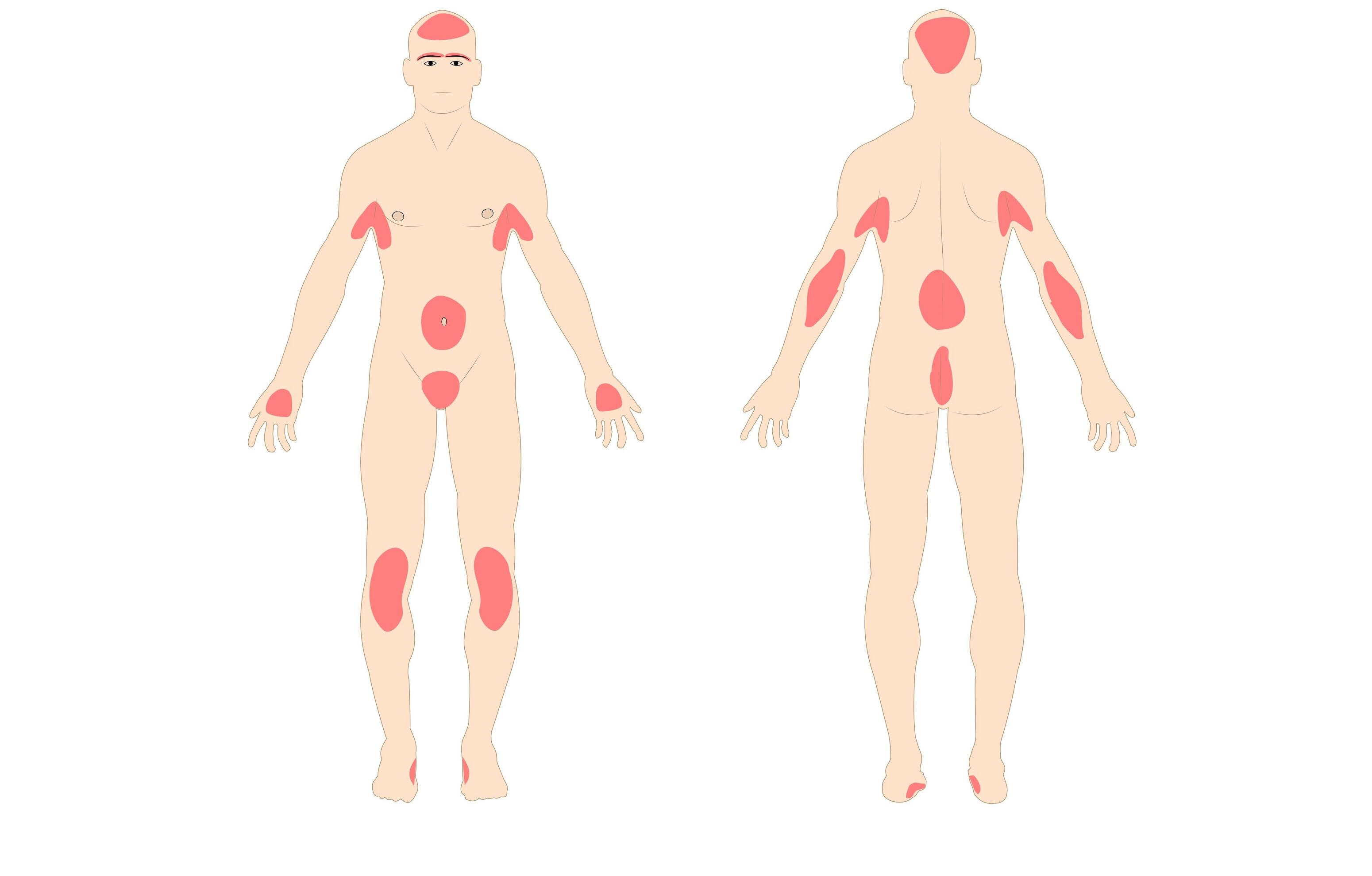
- The area concerned: seborrheic dermatitis mainly affects the scalp, an area rich in sebaceous glands, whereas psoriasis and eczema often affect non-seborrheic areas such as the knees, arms and elbows. Eczema can also affect most parts of the body.
- The appearance of patches and flakiness:
- In the case of seborrheic dermatitis of the scalp, red patches are small, with poorly defined borders, and covered with oily, yellowish scales. They often start at the temples and on top of the head, then spread to the nape of the neck, forehead and back of the ears.
- In contrast, psoriasis patches on the scalp are well defined, with thicker, whitish scales.
- For ringworm, the red patches take on a circular shape and are often accompanied by isolated hair loss. - How symptoms evolve:
- In the case of seborrheic dermatitis of the scalp, symptoms become increasingly visible and irritating, with red patches and oily, loose dandruff. In the most severe cases, plaques and dandruff can accumulate significantly, almost forming a helmet around the head and hair.
- In comparison, eczema patches are often swollen (oedematous) and create blisters.
Seborrheic dermatitis of the scalp and simple dandruff?
The notion of “dandruff” is still poorly defined. This term can refer to a number of situations, including a mild form of seborrheic dermatitis of the scalp, or the consequence of using unsuitable shampoos or cosmetics. In these cases, the condition is known as pityriasis capitis simplex, or simple dandruff.
The relationship between seborrheic dermatitis of the scalp and simple dandruff is also often debated. In scientific literature, the term “dandruff” is sometimes used to refer to various flaky scalp conditions, regardless of their origin.
Prevention: lifestyle and preventive measures
To prevent seborrheic dermatitis of the scalp as much as possible, it’s important to take a general approach and adopt the following dietary and hygiene habits:
In terms of your skincare routine:
- Follow a regular, personalised hair care routine using products specifically formulated for seborrheic dermatitis of the scalp.
- Avoid aggressive products that can irritate the scalp, such as hair dyes and styling products.
- Rinse your scalp thoroughly after each wash.
- Use a soft bristle brush for styling and avoid removing flakes with your fingernails.
- Use gentle shampoos between flare-ups to maintain a healthy scalp.
In terms of lifestyle:
- Avoid triggers such as exhaustion or fatigue.
- Practise stress-management techniques such as meditation, yoga or deep breathing.
- Maintain a healthy weight by adopting an active, balanced lifestyle.
- Limit alcohol and tobacco consumption as much as possible.
- Eat a healthy, balanced diet that’s rich in vegetables, fibre and essential fatty acids, and avoid ultra-processed foods, which are often linked to skin inflammation.
How is seborrheic dermatitis of the scalp treated?
Seborrheic dermatitis is a chronic condition which progresses in flare-ups, alternating between recurrences and remissions. There is no cure for seborrheic dermatitis, but there are highly effective treatments, both medicinal and cosmetic.
The treatments used for seborrheic dermatitis of the scalp are designed to relieve symptoms and minimise recurrence. This is why they act on several levels:
- On hyper-seborrhoea by absorbing excess surface sebum.
- Against the proliferation of Malassezia yeasts, thanks to an antimycotic or antifungal action.
- On dandruff thank to a deflaking action.
- Against redness and itching thanks to an anti-inflammatory action.
Hair care and shampoo products
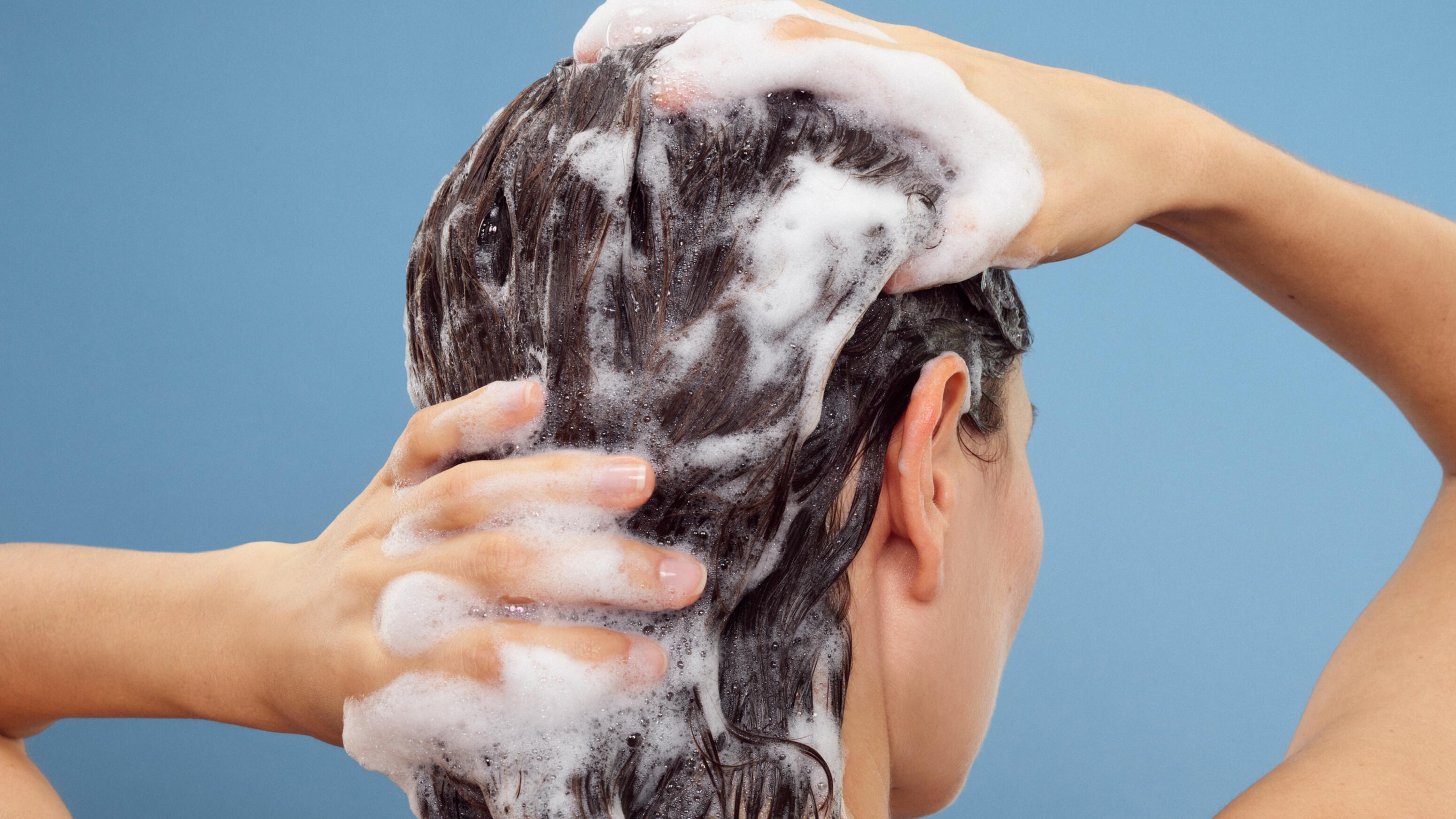
For seborrheic dermatitis of the scalp, a hair care routine consists of two stages:
- an anti-dandruff shampoo specifically formulated for seborrheic dermatitis which eliminates dandruff, calms irritation and soothes itching: for use during flare-ups.
- a gentle shampoo for regular scalp care, alternating with the treatment shampoo.
Medical approach
Like hair care, the medical approach aims to eliminate the signs of seborrheic dermatitis of the scalp and to maintain remission. Treatment may vary depending on the severity of the symptoms. Your doctor may prescribe (4) (5) (6):
- antifungal shampoos or creams with inflammatory properties, such as ketoconazole, ciclopiroxolamine or miconazole. Other treatments based on lithium salts and selenium sulphides can also be used.
- topical corticosteroids, applied locally as a cream or lotion to rapidly reduce inflammation. They are prescribed for short periods and always combined with an antifungal agent.
- keratolytic agents such as salicylic acid to eliminate dandruff.
- oral antifungal medication in cases of severe dermatitis.
- phototherapy (light therapy).
It is of course essential to follow the treatment through to the end and not to end it prematurely.

Sources :
(1) Misery L. Dermatite séborrhéique. EMC - AKOS Traité de Médecine. (2011), pp. 1-5.
(2) Tucker D, Masood S. Seborrheic Dermatitis. In: StatPearls. Treasure Island (FL): StatPearls Publishing; February 16, 2023.
(3) Borda LJ, Wikramanayake TC. Seborrheic Dermatitis and Dandruff: A Comprehensive Review. J Clin Investig Dermatol.
2015;3(2):10.13188/2373-1044.1000019
(4) Gupta AK, Nicol K, Batra R. Role of antifungal agents in the treatment of seborrheic dermatitis. Am J Clin Dermatol. 2004;5(6):417-22. doi: 10.2165/00128071-200405060-00006. PMID: 15663338.
(5) Borda LJ, Perper M, Keri JE. Treatment of seborrheic dermatitis: a comprehensive review. J Dermatolog Treat. 2019 Mar;30(2):158-169. doi: 10.1080/09546634.2018.1473554. Epub 2018 May 24. PMID: 29737895.
(6) Dall'Oglio F, Nasca MR, Gerbino C, Micali G. An Overview of the Diagnosis and Management of Seborrheic Dermatitis. Clin Cosmet Investig Dermatol. 2022 Aug 6;15:1537-1548. doi: 10.2147/CCID.S284671. PMID: 35967915; PMCID: PMC9365318.
Read also
- Discover Eczema or seborrheic dermatitis?
What is seborrheic dermatitis?
Eczema or seborrheic dermatitis?
- Discover Infant seborrheic dermatitis
What is seborrheic dermatitis?
Infant seborrheic dermatitis
- Discover Psoriasis or seborrheic dermatitis?
What is seborrheic dermatitis?
Psoriasis or seborrheic dermatitis?
- Discover Seborrheic dermatitis: scalp and hair loss
What is seborrheic dermatitis?
Seborrheic dermatitis: scalp and hair loss
Our targeted solutions for seborrheic dermatitis
Discover our complete range
- Anti-dandruff treatment shampoo
KELUAL DS ORIGINAL
Anti-dandruff treatment shampooEliminates severe dandruff - Eliminates dandruff after the first application* - Soothes itchiness* - Limits recurrences - Anti-scales cleansing gel
KELUAL DS
Anti-scales cleansing gelPurifies - Removes flakes - Soothes - Reduces redness


Our skincare routines
Irritated skin with redness and flakiness