
What are the different types of acne?
- SUMMARY
- Acne
Acne in adult women
- What can you do about acne on a daily basis?
- Acne and the sun
- What soap should you use for acne?
- Acne and sport
- What kind of make-up should you use for acne?
- Diet and acne
- Peels for acne
- Zinc to fight acne
- Masks to tackle acne
- Taking the pill to tackle acne
- The role of essential oils in treating acne
- Homeopathic remedies for acne
- Acne symptoms
- Acne on the back
- Acne spots: what are they?
- Acne or rosacea?
- Blackheads: what are they?
- Facial acne: how to get rid of it
- Spots on the buttocks (acne): how to get rid of them
- Acne on the forehead
- Acne spots on the lips: causes and solutions
- Whitehead
- Acne scars
- Acne on black skin: how to get rid of it
- Acne on the chin

Acne in adult women
Updated on , approved by our DUCRAY medical experts.
Who said acne was just for teenagers? Did you know that adult acne can affect up to 1 in 2 women(1)?
Far from being a memory from teenage years, this skin condition, which affects between 12 and 54% of women, can occur or persist well beyond the age of 20(1).
Adult acne in women is therefore much more common than you think, but why does it occur? Why do these spots persist or reappear in adulthood? What are the specific triggers for women? What advice should you follow to restore healthy skin?
This article provides an overview of adult acne in women to help you understand it better. Ready to get rid of your acne? Find out how!
How does acne manifest itself in adult women?
There are two main types of acne in adult women:
- the "retentional” type, characterised by comedones (blackheads and whiteheads) and excess sebum.
- the "inflammatory" type, which appears in the form papules, red pustules, and in some cases, inflammatory nodules, which are generally very painful.
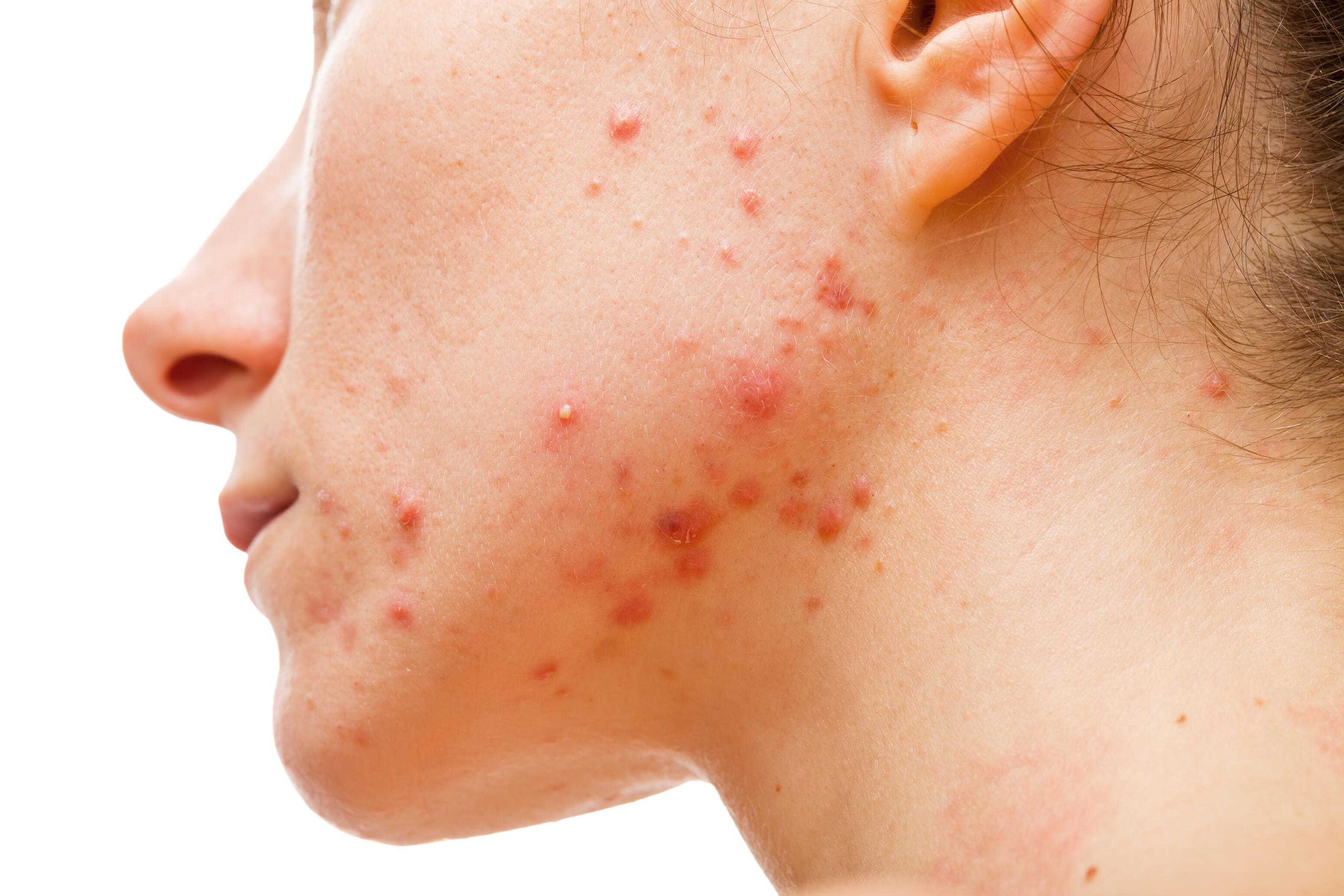
In most cases, acne in adult women is mild to moderate(1), but it can be persistent and sometimes even severe, with a high risk of scarring. Furthermore, classic acne should not be confused with other forms such as fungal acne, which is linked to yeast proliferation and requires a different treatment.
And that's not all! Acne in adult women can be linked to three different contexts:
- Persistent acne, the most common type (in 70 to 80% of cases(2)), continues from adolescence onwards.
- Late-onset acne, on the other hand, appears after the age of 25 (in 20 to 40% of cases(2)), just when you thought you had turned the page.
- Finally, recurrent acne, that intruder that returns periodically, forces us to question every daily action.
However, while some women develop more widespread acne across their entire face, the most typical form of acne in adult women remains linked to late-onset acne concentrated on the lower part of the face (jawline, chin) and sometimes the cheeks and forehead.
What causes acne in adult women?
There are many causes of acne in adult women(1) and it is often a combination of internal and external factors that are at play:
- Firstly, there are hormonal imbalances : periods, pregnancy, the pill, menopause, or even polycystic ovary syndrome can upset the skin's balance by stimulating sebum production.
- Added to this is an imbalance in the skin microbiome: certain bacteria, such as Cutibacterium acnes, promote inflammation and the appearance of spots.
- Lifestyle can also tip the balance and contribute to the onset of acne in adult women(3): stress, smoking, an unbalanced diet with an excess of fast-releasing sugars, ultra-processed industrial foods or dairy products, alcohol, the use of unsuitable cosmetics... The result? Acne that is often persistent and difficult to treat.
- A family history(4) and combination or oily skin are other factors that contribute to acne in adult women. These predispositions particularly influence your skin’s sensitivity level and inflammatory response.
Certain specific contexts, such as skin irritation or infection in sensitive areas, can also lead to particular symptoms, such as pubic acne, which is important to differentiate correctly in order to provide appropriate treatment.
What are the treatments for acne in adult women?
To treat acne in adult women, it is important to tailor the treatment to the individual. There are several options available to discuss with your doctor(3):
- Creams containing retinoids or azelaic acid are ideal for mild to moderate cases: they reduce spots, unclog pores and reduce marks.
- For more severe cases, oral treatments such as antibiotics, spironolactone (anti-androgen) or the contraceptive pill target the hormonal causes.
- If these solutions are not sufficient, isotretinoin may be used as a last resort on prescription from a healthcare professional.
Acne prevention in adult women
Preventing acne in adult women starts with simple steps!
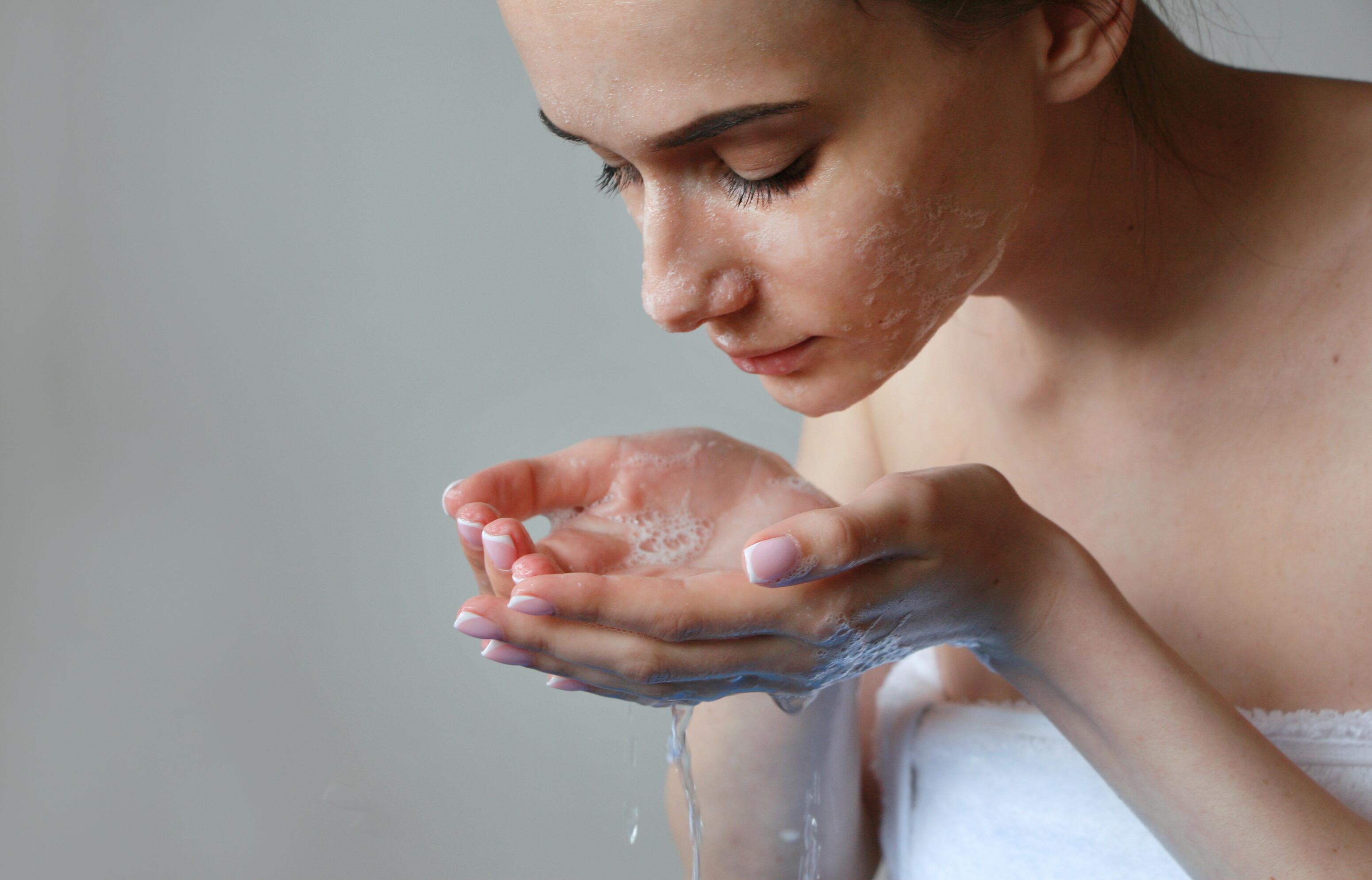
- Adopt a targeted skincare routine specifically for "adult skin with imperfections” as soon as possible.
- Protect your skin from the sun with SPF 50+ protection that is suitable for acne-prone skin.
- Learn stress management techniques: breathing techniques, yoga, or any relaxing activity you enjoy!
- Eat a balanced diet: avoid excessive consumption of sugar, dairy products, processed foods, etc. to reduce hormonal impact.
- Have regular medical check-ups to monitor your hormone balance.
Sources :
(1) Branisteanu DE, Toader MP, Porumb EA, Serban IL, Pinzariu AC, Branisteanu CI, Vicovan A, Dimitriu A, Fartusnic IA, Boda D, Branisteanu DC, Brihan I, Nicolescu AC. Adult female acne: Clinical and therapeutic particularities (Review). Exp Ther Med. 2022 Feb;23(2):151. doi: 10.3892/etm.2021.11074. Epub 2021 Dec 16. PMID: 35069832; PMCID: PMC8753972.
(2) Costa, I., & Velho, G. (2018). Acne Vulgar no Adulto. , 76, 299-312.
(3) Brǎnișteanu, D., Toader, M., Porumb, E., Șerban, I., Pînzariu, A., Brănişteanu, C., Vicovan, A., Dimitriu, A., Fartusnic, I., Boda, D., Brănișteanu, D., Brihan, I., & Nicolescu, A. (2021). Adult female acne: Clinical and therapeutic particularities (Review). Experimental and Therapeutic Medicine, 23.
(4) Anaba, E., & Oaku, I. (2020). Adult female acne: A cross-sectional study of diet, family history, body mass index, and premenstrual flare as risk factors and contributors to severity. International Journal of Women's Dermatology, 7, 265 - 269.
Read also
- Discover Severe acne
What are the different types of acne?
Severe acne
- Discover Cystic acne
What are the different types of acne?
Cystic acne
- Discover Acne fulminans
What are the different types of acne?
Acne fulminans
- Discover Neonatal acne
What are the different types of acne?
Neonatal acne
- Discover Retentional acne
What are the different types of acne?
Retentional acne
- Discover Inflammatory acne
What are the different types of acne?
Inflammatory acne
- Discover Acne in men
What are the different types of acne?
Acne in men
- Discover Juvenile acne
What are the different types of acne?
Juvenile acne
Our targeted solutions for acne
Discover our complete range
- Anti-blemishes cleansing gel face and body
KERACNYL
Anti-blemishes cleansing gel face and bodyCleanses - Helps to get rid of imperfections - Anti-Blemish Cream
KERACNYL PP+
Anti-Blemish CreamAvoids skin marks - Helps to get rid of imperfections - Compensates for the effects of drying treatments


Our skincare routines
Oily or acne-prone skin
- Discover Anti-blemish face care summer routine for adult skin
Anti-blemish face care summer routine for adult skin
Do you have blemish-prone skin as an adult?