
What causes acne?
- SUMMARY
- Acne
Hormonal acne
- What can you do about acne on a daily basis?
- Acne and the sun
- What soap should you use for acne?
- Acne and sport
- What kind of make-up should you use for acne?
- Diet and acne
- Peels for acne
- Zinc to fight acne
- Masks to tackle acne
- Taking the pill to tackle acne
- The role of essential oils in treating acne
- Homeopathic remedies for acne
- Acne symptoms
- Acne on the back
- Acne spots: what are they?
- Acne or rosacea?
- Blackheads: what are they?
- Facial acne: how to get rid of it
- Spots on the buttocks (acne): how to get rid of them
- Acne on the forehead
- Acne spots on the lips: causes and solutions
- Whitehead
- Acne scars
- Acne on black skin: how to get rid of it
- Acne on the chin

By definition, acne is a skin condition influenced by hormones, particularly androgens, which stimulate the sebaceous glands and encourage excess sebum production(1).
However, behind this common mechanism, acne comes in several forms, such as acne vulgaris, hormonal acne, medication-induced acne, etc., each with its own specific characteristics.
But what exactly is hormonal acne? What distinguishes hormonal acne from other forms of acne? And are there any suitable solutions to tackle it?
In this article, discover everything you need to know about this type of acne.
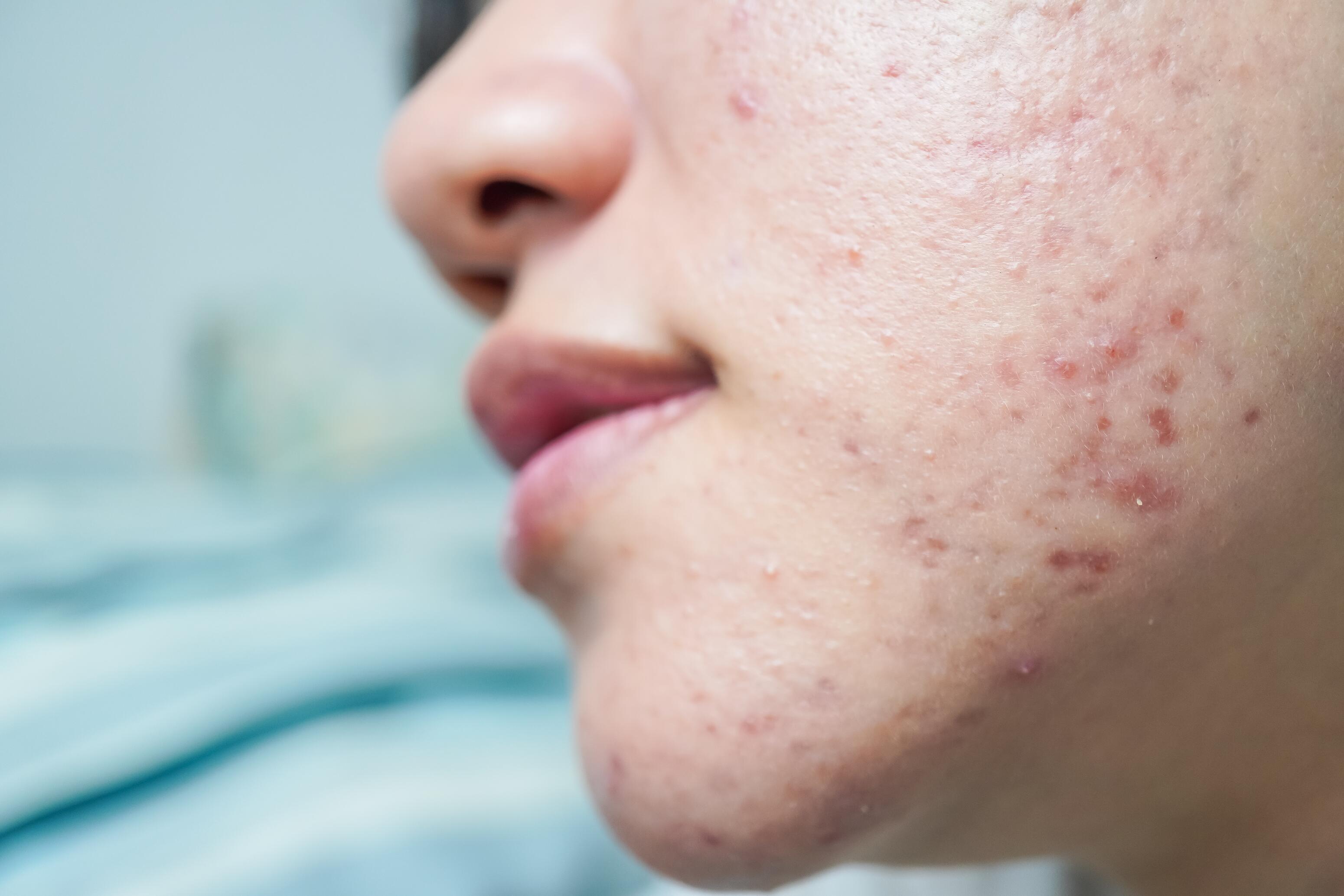
What is hormonal acne and how can you recognise it?
Acne is a skin condition directly influenced by male sex hormones, called androgens, particularly testosterone.
During puberty, increased androgen levels in both boys and girls stimulate the overproduction of sebum, leading to the appearance of spots.
While hormone levels generally stabilise after puberty in men, they remain highly fluctuating in women, particularly due to the menstrual cycle.
All forms of acne are therefore, by their very nature, linked to hormones.
The term "hormonal acne" is therefore used in everyday language to refer to a specific type of acne: acne in adult women. This form of acne is exacerbated by hormonal changes during the menstrual cycle.
Hormonal acne in men therefore has its own specific characteristics, as men do not experience monthly hormonal fluctuations!
Many women notice the appearance of spots before or during their period. These spots, often located on the lower part of the face or neck, are the result of two hormonal mechanisms:
- Progesterone, which dominates in the second half of the cycle, stimulates sebum production.
- Testosterone, which is more pronounced at the end of the cycle, when female hormones (oestrogen and progesterone) are at their lowest.
Here is how to recognise hormonal acne, which is characterised by:
- The location of the spots, situated on the chin, jaw, lower cheeks and sometimes the neck.
- The cyclical appearance of spots with acne breakouts that often occur before or during menstruation.
- The type of spots: they are red and often accompanied by microcysts (spots under the skin).
- The possible occurrence of irregular periods, excessive hair growth or hair loss (in cases of significant hormonal imbalance).
However, before concluding that it is hormonal acne, it is important to rule out all possible causes of acne in adults, such as unsuitable cosmetics, medications, specific occupational exposures, etc.
Who is affected by hormonal acne?
Teenagers, adults, men, women: hormonal acne is a skin condition that can affect anyone, by definition, but it does not affect everyone in the same way.
Although hormones influence all forms of acne, this term is mainly used to describe acne in adult women.
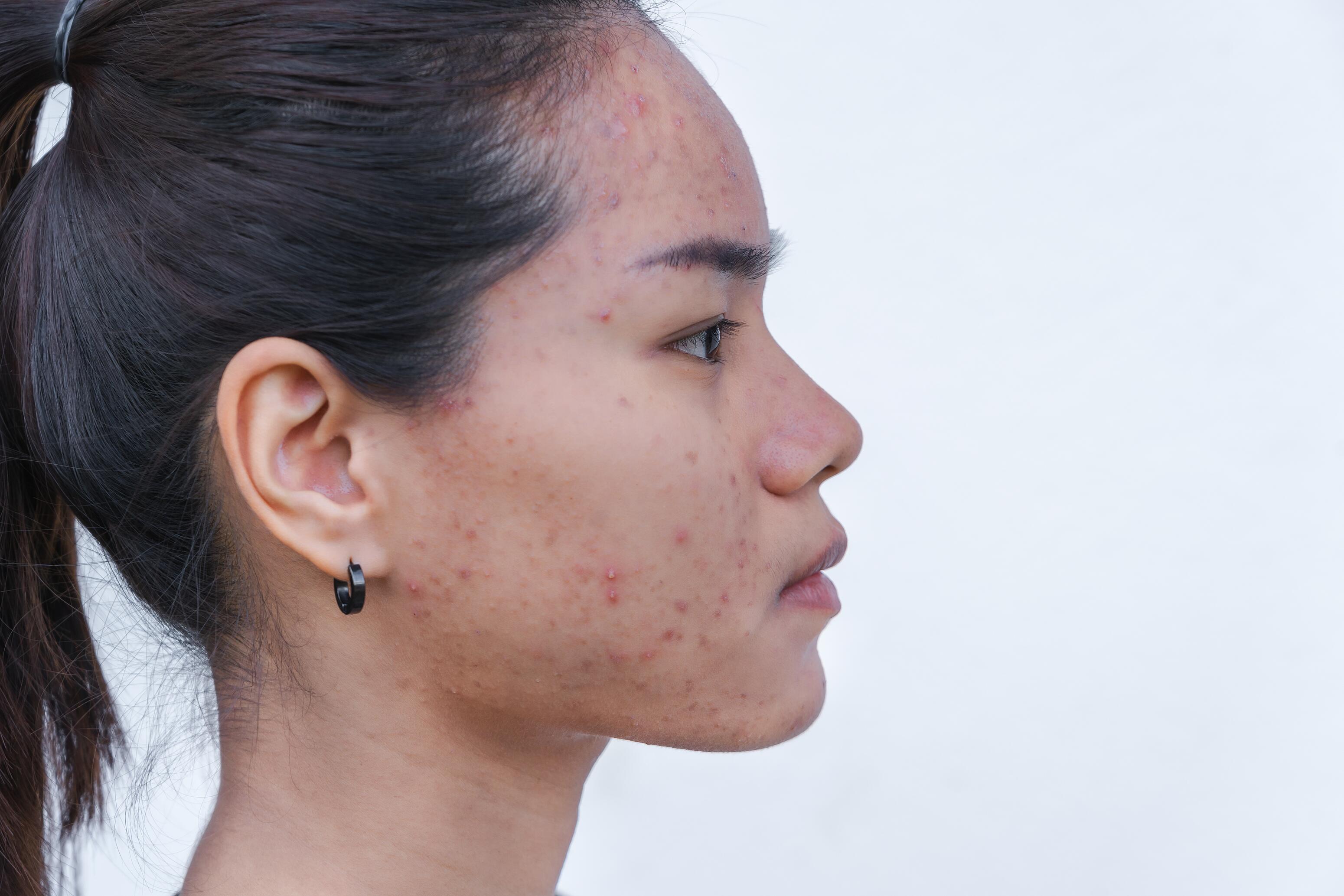
Women
After the age of 25, hormonal acne often becomes a female issue. Why? Menstrual cycles, pregnancy, polycystic ovary syndrome (PCOS) and even menopause disrupt hormonal balance.
Result: spots on the lower part of the face, often before your period.
Premenstrual syndrome (PMS)
Spotting just before your period? Progesterone and testosterone levels increase... This acne is often located on the chin and jawline.
Polycystic ovary syndrome (PCOS)
Hirsutism (excessive hair growth), irregular cycles, weight gain and persistent acne? PCOS, or polycystic ovary syndrome, is often the cause(2). Chronic hormonal imbalance leads to excess androgens, causing an overproduction of sebum and inflammatory spots.
Endometriosis
Endometriosis is a chronic condition in which tissue similar to that lining the inside of the womb grows outside of it, causing pain, inflammation and sometimes difficulty conceiving.
Although not directly related to acne, endometriosis can cause hormonal imbalances, particularly when certain treatments are used, sometimes aggravating breakouts(3).
Hormonal acne in men
Hormonal acne in men remains less common, but it can manifest itself as:
- oily skin and spots when there are high levels of testosterone and dihydrotestosterone.
- persistent acne after adolescence in some men who are particularly sensitive to androgen hormones.
- breakouts following hormonal treatments, such as gender-affirming hormone therapy(4).
Hormonal acne can therefore also affect men, but in a different way.
Hormonal acne in adolescence
Hormonal acne is common during puberty, when androgen levels increase. More specifically, we refer to acne vulgaris or juvenile acne.
It affects both boys and girls, but is often more severe in boys due to their higher androgen levels.
When does hormonal acne appear?
Hormonal acne, in general terms, does not have a specific age, but it follows hormonal changes.
In adolescence
Androgens surge, sebaceous glands go into overdrive, and acne appears. This is the most classic case.
In adulthood
Above the age of 25, hormonal acne is more common in women(5). Hormonal fluctuations related to the menstrual cycle are the main cause, but stress and other environmental factors may also play a role.
During pregnancy
Pregnancy is a real hormonal rollercoaster!
Pregnancy causes significant hormonal fluctuations. Depending on the stage of pregnancy, some women see their acne improve due to increased oestrogen levels, while others experience worsening symptoms due to increased androgen levels.
During the menopause
The decrease in oestrogen during the menopause can lead to a relative dominance of androgens, causing the onset or worsening of acne, sometimes unexpectedly, in some women.

What to do about hormonal acne
Hormonal acne, associated with adult female acne, requires specific treatment.
Unlike juvenile acne, hormonal acne with microcysts, seen in adult women, is closely linked to hormonal fluctuations during the menstrual cycle, imbalances such as polycystic ovary syndrome (PCOS), or hormonal changes associated with pregnancy or the menopause.
The conventional acne treatments (such as retinoids, benzoyl peroxide and antibiotics) can reduce the symptoms of hormonal acne, but they do not target the hormonal cause and are often insufficient on their own: a personalised approach is therefore essential. Here are some tips.
Use appropriate skincare products
In all cases, hygiene and skincare must be tailored to acne-prone skin, using non-comedogenic cosmetics.
Here are 3 tips to optimise your routine for hormonal acne:
- Remember to cleanse your skin morning and evening with a gentle foaming gel specially designed for acne-prone skin. This type of cleanser removes impurities without causing irritation or dryness.
- Then target imperfections with skincare products such as serums rich in active ingredients like azelaic acid, myrtle extract or glycolic acid. These ingredients help regulate sebum, soothe redness and reduce spots.
- Do not forget to use SPF 50+ sun protection when exposed to the sun: some treatments can make the skin more sensitive to UV rays, increasing the risk of irritation and post-acne pigmentation spots. By protecting your skin properly, you will prevent marks from appearing or worsening on your skin.
Developing the right habits
To limit the impact of hormonal fluctuations, a few daily habits can also make a difference:
- When it comes to nutrition, focus on a diet rich in vegetables, fibre and essential fatty acids, without seeking out "miracle" diets or foods for hormonal acne. These foods promote hormonal balance and reduce inflammation.
- In terms of physical activity, move around regularly throughout the day. Even moderate activity improves blood circulation and helps stabilise hormones.
- Finally, when it comes to stress management, learn to calm your mind. Chronic stress stimulates the production of cortisol, a hormone that can disrupt androgen balance and worsen acne. Meditation, deep breathing, or simply taking regular breaks can be a great help.
Hormonal acne: medication
Hormonal acne often requires targeted treatments. These treatments aim to regulate the hormones responsible for acne or to act directly on skin lesions.
Oral hormone treatments are often the first line of treatment for adult women suffering from hormonal acne. These can include(6):
- Combined oral contraceptives (COCs), i.e. pills containing oestrogens and low-androgenic progestogens. They help to regulate hormones by reducing sebum production. They are effective for women who want contraception while treating their acne.
- Spironolactone: this medicine is an oral anti-androgen that blocks androgen receptors, thereby reducing sebum production and acne lesions. It is particularly recommended for severe or moderate forms of hormonal acne in women.
Topical treatments are often combined with hormone therapies to maximise effectiveness: creams can directly target hormone receptors in the skin. This helps reduce acne spots without side effects(7).
In cases of severe hormonal acne, oral isotretinoin may be prescribed to permanently reduce sebum production, but it requires strict medical supervision. Oral corticosteroids, on the other hand, are reserved for acute inflammation and used for short periods of time.
Consult with a dermatologist to find the treatment best suited to your situation.
Hormonal acne: natural treatments
In cases of hormonal acne, natural treatments, particularly herbal medicine, may be an attractive option.
Certain plants, such as chaste tree, known for its effects on hormonal balance, or evening primrose oil, rich in essential fatty acids, are often recommended. These treatments mainly act on regulating menstrual cycles and reducing hormonal imbalances.
However, it is important to remember that natural does not mean risk-free. Plants may interact with other substances or cause adverse effects if used incorrectly.
Always consult with a healthcare professional before starting treatment, as each case of hormonal acne is unique and only a specialist healthcare professional will be able to advise you on:
- choosing plants that are suitable for your situation.
- the precise dosage and method of administration.
- the management of possible interactions with other ongoing treatments.
So using a natural treatment to tackle hormonal acne is possible, provided you receive personalised medical support!
When should you carry out a hormonal assessment?
A hormonal assessment is recommended when acne is accompanied by other symptoms such as hair loss, excessive hair growth, weight gain, irregular cycles, fertility issues, etc.
The assessment aims to identify any hormonal imbalance that may explain the acne and other associated symptoms. It may include hormone dosages such as testosterone, oestrogen, progesterone, or androgens.
Consult with a doctor or dermatologist to assess whether a hormonal acne test is necessary. Appropriate treatment will depend on the results obtained and the causes identified.
Sources :
(1) Ju, Q., Tao, T., Hu, T., Karadağ, A., Al-Khuzaei, S., & Chen, W. (2017). Sex hormones and acne.. Clinics in dermatology, 35 2, 130-137.
(2)Tehrani, R., Behboudi-Gandevani, S., Yarandi, B., Naz, S., & Carmina, E. (2020). Prevalence of acne vulgaris among women with polycystic ovary syndrome: a systemic review and meta-analysis. Gynecological Endocrinology, 37, 392 - 405.
(3) Brown, J., Kives, S., & Akhtar, M. (2012). Progestagens and anti-progestagens for pain associated with endometriosis.. The Cochrane database of systematic reviews, 3, CD002122.
(4) Motosko, C., Zakhem, G., Pomeranz, M., & Hazen, A. (2018). Acne: a side‐effect of masculinizing hormonal therapy in transgender patients. British Journal of Dermatology, 180.
(5) Rocha, M., & Bagatin, E. (2018). Adult-onset acne: prevalence, impact, and management challenges. Clinical, Cosmetic and Investigational Dermatology, 11, 59 - 69.
(6) Cantrell, W., Easley, L., & Squittieri, K. (2024). Steroids Used to Treat Acne Vulgaris: A Review of Efficacy, Safety, and Clinical Considerations.. Journal of drugs in dermatology : JDD, 23 6, 404-409.
(7) Barbieri, J. (2020). A New Class of Topical Acne Treatment Addressing the Hormonal Pathogenesis of Acne. JAMA dermatology.
Read also
- Discover Acne and pregnancy
What causes acne?
Acne and pregnancy
- Discover Bacteria: Cutibacterium acnes
What causes acne?
Bacteria: Cutibacterium acnes
- Discover Acne and stress
What causes acne?
Acne and stress
- Discover Excess sebum
What causes acne?
Excess sebum
Our targeted solutions for acne
Discover our complete range
- Anti-blemishes cleansing gel face and body
KERACNYL
Anti-blemishes cleansing gel face and bodyCleanses - Helps to get rid of imperfections - Anti-Blemish Cream
KERACNYL PP+
Anti-Blemish CreamAvoids skin marks - Helps to get rid of imperfections - Compensates for the effects of drying treatments


Our skincare routines
Oily or acne-prone skin
- Discover Anti-blemish face care summer routine for adult skin
Anti-blemish face care summer routine for adult skin
Do you have blemish-prone skin as an adult?