
What is the right acne treatment?
- SUMMARY
- Acne
Ingredients that help tackle acne
- What can you do about acne on a daily basis?
- Acne and the sun
- What soap should you use for acne?
- Acne and sport
- What kind of make-up should you use for acne?
- Diet and acne
- Peels for acne
- Zinc to fight acne
- Masks to tackle acne
- Taking the pill to tackle acne
- The role of essential oils in treating acne
- Homeopathic remedies for acne
- Acne symptoms
- Acne on the back
- Acne spots: what are they?
- Acne or rosacea?
- Blackheads: what are they?
- Facial acne: how to get rid of it
- Spots on the buttocks (acne): how to get rid of them
- Acne on the forehead
- Acne spots on the lips: causes and solutions
- Whitehead
- Acne scars
- Acne on black skin: how to get rid of it
- Acne on the chin

Ingredients that help tackle acne
Updated on , approved by our DUCRAY medical experts.
Do you know the ingredients that are essential in reducing acne?
Azelaic acid, glycolic acid, benzoyl peroxide and retinol are among the essential active ingredients often prescribed by dermatologists. But do you know exactly how they work and what benefits they bring to the skin?
Which ingredients are considered most effective in reducing blemishes? Can they be combined to enhance their effect? While historical ingredients such as glycolic acid for the face have proven their effectiveness, what about newer active ingredients?
This article provides a brief overview of the most recommended ingredients.
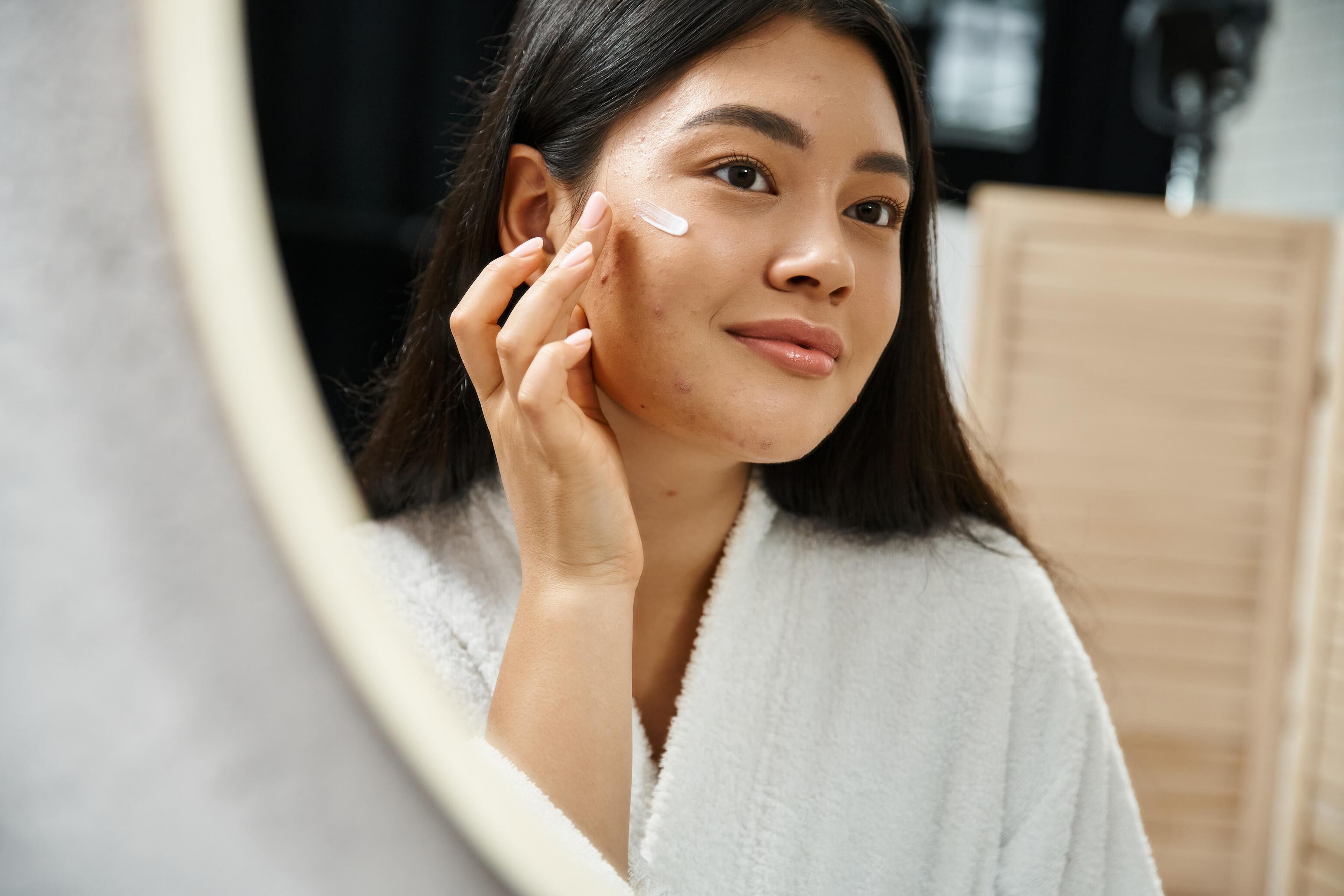
Understanding acne
Acne is a multifactorial condition, influenced by internal and external factors, which can take various forms(1).
Knowing the cause and identifying, with the help of a dermatologist, the type of acne you have is essential for selecting the right ingredients, including azelaic acid and glycolic acid, and for effective treatment.
The main causes of acne
Acne is influenced by genetic, environmental and hormonal factors(2). Here are the main causes of acne:
- Overproduction of sebum, often stimulated by hormonal fluctuations.
- The accumulation of dead skin cells, which clog pores and promote the appearance of blackheads and comedones.
- A bacterial imbalance, particularly the proliferation of Cutibacterium acnes.
Of course, these factors may vary depending on the type of acne.
Types of acne
Acne comes in various forms(3), like retentional acne, characterised by blackheads and open or closed comedones, inflammatory acne, or hormonal acne linked to hormonal fluctuations and common in adult women.
In fact, depending on the nature of the spots and lesions, acne can be classified into several categories(3):
- Retentional (or comedonal) acne with open comedones (blackheads) and closed comedones (whiteheads). It is a mild form with little inflammation.
- Inflammatory acne with red, painful spots such as papules and pustules. It is often more severe and requires appropriate treatment.
- Combination acne, which is a combination of retentional and inflammatory acne.
- Nodulocystic acne, a very severe form of acne, characterised by deep lesions (nodules and cysts) that can lead to permanent scarring.
- Forms of acne fulminans or acne conglobata remain very rare and severe forms.
Acne is not limited to teenagers: adults can also suffer from it, in persistent, late-onset (appearing mainly after the age of 25) or recurrent forms, particularly in women(4).
Depending on the diagnosis, the dermatologist will tailor treatments to meet the specific needs of each case, recommending, for example, azelaic acid creams, retinol-based treatments, etc.
Ingredients that are effective against acne
Whether you suffer from blackheads, red spots, inflammation or scars, there are ingredients specially formulated to address these needs: retinol, azelaic acid, glycolic acid, benzoyl peroxide, etc.
Here is an overview of the main ingredients used in acne treatments.

Salicylic acid
Salicylic acid is one of the key ingredients for treating mild to moderate acne(5). Thanks to its exfoliating properties, this keratolytic active ingredient removes dead skin cells and unclogs pores, thereby reducing blackheads and whiteheads.
Generally well tolerated, salicylic acid is often found in cleansing gels or creams suitable for acne-prone skin.
Glycolic acid
Glycolic acid belongs to the family of alpha hydroxy acids (AHAs). It is widely recognised in dermatology for its effectiveness in treating acne. Why? There are several reasons for this:
- Its small molecular size, the smallest among AHAs, allows it to penetrate the surface layers of the skin to perform targeted exfoliation. By acting on corneocytes (links between dead cells), it facilitates their removal and helps unclog pores, thereby limiting the formation of blackheads.
- Thanks to its slightly acidic pH (around 4-3), glycolic acid also has antibacterial properties, effective against Cutibacterium acnes, a bacterium involved in acne inflammation(6 and7).
- At the same time, it also promotes skin hydration by drawing water into the epidermis and stimulates collagen production, which can improve skin texture and firmness.
It is often advisable to combine active ingredients to enhance their effectiveness. Certain combinations of active ingredients are often used in topical acne treatments, such as:
- azelaic acid and glycolic acid.
- glycolic acid and salicylic acid.
- glycolic acid and vitamin C.
In general, glycolic acid can easily be incorporated into products for daily or weekly use, provided that the appropriate concentrations are used and the skin is well protected with sun cream. A glycolic acid-based treatment can also be applied to the body and/or face.
Azelaic acid
Azelaic acid is a molecule naturally present in certain cereals. This molecule has long been used in dermatology for its beneficial effects on the skin.
Azelaic acid (like glycolic acid) acts on several levels and is particularly effective against mild to moderate acne(8). It has an affect on, among other things:
- Sebum regulation: it balances the activity of the sebaceous glands, reducing the excess sebum responsible for acne.
- Anti-bacterial action.
- Anti-inflammatory action: it soothes redness and reduces marks left by blemishes, particularly post-inflammatory hyperpigmentation.
Azelaic acid can be incorporated into a daily skincare routine, morning and evening, in the form of an anti-blemish serum or cream.
And combining azelaic acid and glycolic acid is a real bonus! These two active ingredients can then act synergistically:
- Azelaic acid soothes inflammation, reduces redness and combats the bacteria responsible for acne. A cream containing azelaic acid is ideal for sensitive skin prone to post-acne marks.
- Glycolic acid on the face (just like using a glycolic acid cream on the body), with its exfoliating action, improves skin texture by removing dead cells and unclogging pores.
By combining their actions, azelaic acid and glycolic acid help treat existing spots, prevent their appearance and improve the overall radiance and softness of the skin. A serum (or skincare routine) that combines azelaic acid and glycolic acid is therefore ideal for people looking for gentle yet effective solutions to acne-related blemishes.
Benzoyl peroxide
Benzoyl peroxide is a key molecule in acne treatment thanks to its versatile and targeted action. It acts on the main causes of acne thanks to:
- Its antibacterial action: by releasing oxygen on contact with the skin, benzoyl peroxide creates an environment that is unfavourable to the bacteria responsible for acne, in particular Cutibacterium acnes (formerly known as Propionibacterium acnes).
- Its comedolytic action: benzoyl peroxide helps unclog pores by accelerating cell renewal. This helps to eliminate comedones (blackheads and whiteheads) and prevent hair follicles from becoming blocked.
- Its mild anti-inflammatory properties.
Benzoyl peroxide can be used in different concentrations, in the form of gels, creams or cleansers(9). Lower concentrations are ideal for sensitive skin, while stronger formulations are reserved for moderate to severe cases.
Although highly effective, benzoyl peroxide can nevertheless dry out or irritate the skin, especially in high doses(10). To limit these side effects, it is therefore recommended to use a moisturising cream after application and to start with gradual application (every other day). Sun protection is also essential, as this molecule can make the skin more sensitive to the sun. Ask your dermatologist for advice.
Retinoids
Retinoids are vitamin A derivatives widely used to treat acne and are among the first treatments that can be recommended and prescribed by a doctor(11). Their mechanism is based on three main actions:
- Retinoids accelerate cell renewal, which helps to unclog blocked pores.
- Retinoids reduce the inflammation responsible for redness.
- Retinoids prevent the formation of new spots by balancing the activity of the sebaceous glands.
Available in various molecular forms, such as tretinoin or adapalene, they are often better tolerated today thanks to modern formulations. In all cases, medical advice is strongly recommended, as the use of retinoids requires careful monitoring to avoid discomfort:
- At the beginning of treatment in particular, it is normal to experience slight irritation, redness or flaking. It is therefore recommended to start slowly: apply a thin layer every 2 or 3 evenings, then gradually increase the frequency.
- Another important point: retinoids make the skin more sensitive to sunlight. Products containing retinol should therefore be applied in the evening, and daily sun protection is essential, even in winter, to prevent irritation or pigmentation spots.
- Finally, you will need to incorporate a good moisturiser into your routine.
Niacinamide (vitamin B3)
Niacinamide, also known as nicotinamide(12), is a derivative of vitamin B3. With a long scientific history, this molecule plays a key role in cellular health by participating in essential metabolic processes, such as energy production and skin repair.
When applied topically, niacinamide is effective in treating mild to moderate acne:
- Thanks to its anti-inflammatory properties, niacinamide reduces redness associated with inflammatory spots while soothing irritation.
- Niacinamide limits excess sebum, which helps prevent clogged pores and the appearance of new spots.
- Thanks to its antioxidant action, niacinamide also protects the skin against premature ageing caused by free radicals. It also helps to reduce blemishes and even out skin tone.
Niacinamide is generally suitable for all skin types. Non-irritating and non-photosensitising, niacinamide can therefore be easily incorporated into an anti-acne routine. It can be used morning and evening, alone or in combination with other active ingredients, such as salicylic acid, azelaic acid, glycolic acid, etc.
Sulphur
Sulphur is a natural active ingredient renowned for its many properties, including antibacterial, anti-inflammatory, keratolytic (ability to remove dead skin cells) and sebum-regulating properties(13). The use of sulphur dates back to ancient times, when the Romans used it in baths to purify the skin.
What makes it special? Sulphur interacts with the cysteine present in the stratum corneum to produce hydrogen sulphide, a compound that breaks down keratin and unclogs pores. This exfoliating action reduces imperfections and improves skin texture. In addition, sulphur inhibits the growth of Cutibacterium acnes, the bacterium involved in the development of acne, making it a doubly effective agent.
Sulphur is generally well tolerated, and any reactions that do occur are mild (signs of slight erythema). So whether in the form of a soap, mask or cream, it is recommended to use it 2 to 3 times a week, followed by thorough moisturising to prevent dryness.
Always consult with your dermatologist for advice tailored to your needs.
Sources :
(1) Cong, T., Hao, D., Wen, X., Li, X., He, G., & Jiang, X. (2019). From pathogenesis of acne vulgaris to anti-acne agents. Archives of Dermatological Research, 311, 337-349.
(2) Yang, J., Yang, H., Xu, A., & He, L. (2020). A Review of Advancement on Influencing Factors of Acne: An Emphasis on Environment Characteristics. Frontiers in Public Health, 8.
(3) Eichenfield, D., Sprague, J., & Eichenfield, L. (2021). Management of Acne Vulgaris: A Review.. JAMA, 326 20, 2055-2067.
(4) Branisteanu, D., Toader, M., Porumb, E., Șerban, I., Pînzariu, A., Brănişteanu, C., Vicovan, A., Dimitriu, A., Fartusnic, I., Boda, D., Brănișteanu, D., Brihan, I., & Nicolescu, A. (2021). Adult female acne: Clinical and therapeutic particularities (Review). Experimental and Therapeutic Medicine, 23.
(5) Yeoh, S., & Goh, C. (2021). Topical delivery of salicylates. Drug Delivery and Translational Research, 12, 981 - 1001.
(6) Takenaka Y, Hayashi N, Takeda M, Ashikaga S, Kawashima M. Glycolic acid chemical peeling improves inflammatory acne eruptions through its inhibitory and bactericidal effects on Propionibacterium acnes. J Dermatol. 2012 Apr;39(4):350-4.
(7) Valle-González, E., Jackman, J., Yoon, B., Mokrzecka, N., & Cho, N. (2020). pH-Dependent Antibacterial Activity of Glycolic Acid: Implications for Anti-Acne Formulations. Scientific Reports, 10.
(8) Sieber, M., & Hegel, J. (2013). Azelaic Acid: Properties and Mode of Action. Skin Pharmacology and Physiology, 27, 9 - 17.
(9) Harper, J. (2010). Benzoyl peroxide development, pharmacology, formulation and clinical uses in topical fixed-combinations.. Journal of drugs in dermatology : JDD, 9 5, 482-7.
(10) Brammann, C., & Müller-Goymann, C. (2020). An update on formulation strategies of benzoyl peroxide in efficient acne therapy with special focus on minimizing undesired effects.. International journal of pharmaceutics, 119074.
(11) Baldwin, H., Webster, G., Gold, S., Callender, V., Cook-Bolden, F., & Guenin, E. (2021). 50 Years of Topical Retinoids for Acne: Evolution of Treatment. American Journal of Clinical Dermatology, 22, 315 - 327.
(12) Rolfe, H. (2014). A review of nicotinamide: treatment of skin diseases and potential side effects. Journal of Cosmetic Dermatology, 13.
(13) Gupta, A., & Nicol, K. (2004). The use of sulfur in dermatology.. Journal of drugs in dermatology : JDD, 3 4, 427-31.
Read also
- Discover Consult a physician
What is the right acne treatment?
Consult a physician
- Discover Serums for acne
What is the right acne treatment?
Serums for acne
- Discover Acne laser treatment
What is the right acne treatment?
Acne laser treatment
- Discover Medicinal treatments
What is the right acne treatment?
Medicinal treatments
Our targeted solutions for acne
Discover our complete range
- Anti-blemishes cleansing gel face and body
KERACNYL
Anti-blemishes cleansing gel face and bodyCleanses - Helps to get rid of imperfections - Anti-Blemish Cream
KERACNYL PP+
Anti-Blemish CreamAvoids skin marks - Helps to get rid of imperfections - Compensates for the effects of drying treatments


Our skincare routines
Oily or acne-prone skin
- Discover Anti-blemish face care summer routine for adult skin
Anti-blemish face care summer routine for adult skin
Do you have blemish-prone skin as an adult?