
What are the different types of acne?
- SUMMARY
- Acne
Neonatal acne: symptoms and treatments
- Acne symptoms
- Acne on the back
- Acne or rosacea?
- Acne spots: what are they?
- Blackheads: what are they?
- Facial acne: how to get rid of it
- Spots on the buttocks (acne): how to get rid of them
- Acne spots on the lips: causes and solutions
- Whitehead
- Acne on the forehead
- Acne scars
- Acne on black skin: how to get rid of it
- Acne on the chin
- What can you do about acne on a daily basis?
- What soap should you use for acne?
- What kind of make-up should you use for acne?
- Acne and the sun
- Peels for acne
- Diet and acne
- Zinc to fight acne
- Acne and sport
- Taking the pill to tackle acne
- Masks to tackle acne
- The role of essential oils in treating acne
- Homeopathic remedies for acne

Neonatal acne: symptoms and treatments
Updated on , approved by our DUCRAY medical experts.
When we think of acne, we immediately imagine adolescence with its share of unsightly spots...
But did you know that even babies can get them? This is commonly referred to as baby acne, also known as neonatal acne.
This may seem surprising to new parents, but rest assured: it is a common phenomenon and completely harmless. These small spots often appear in the first few weeks of life and disappear spontaneously without leaving any marks.
But then, why does your baby have neonatal acne? Is it related to their diet? What can be done to help them? Can its appearance be prevented?
Read on, we'll explain!
What are infant blemishes?
Baby acne, also known as neonatal acne, is a form of acne; that affects approximately 20% of newborns under 6 to 8 weeks of age(1). Beyond this age, we refer to it as infantile acne, which is a slightly different form(1).
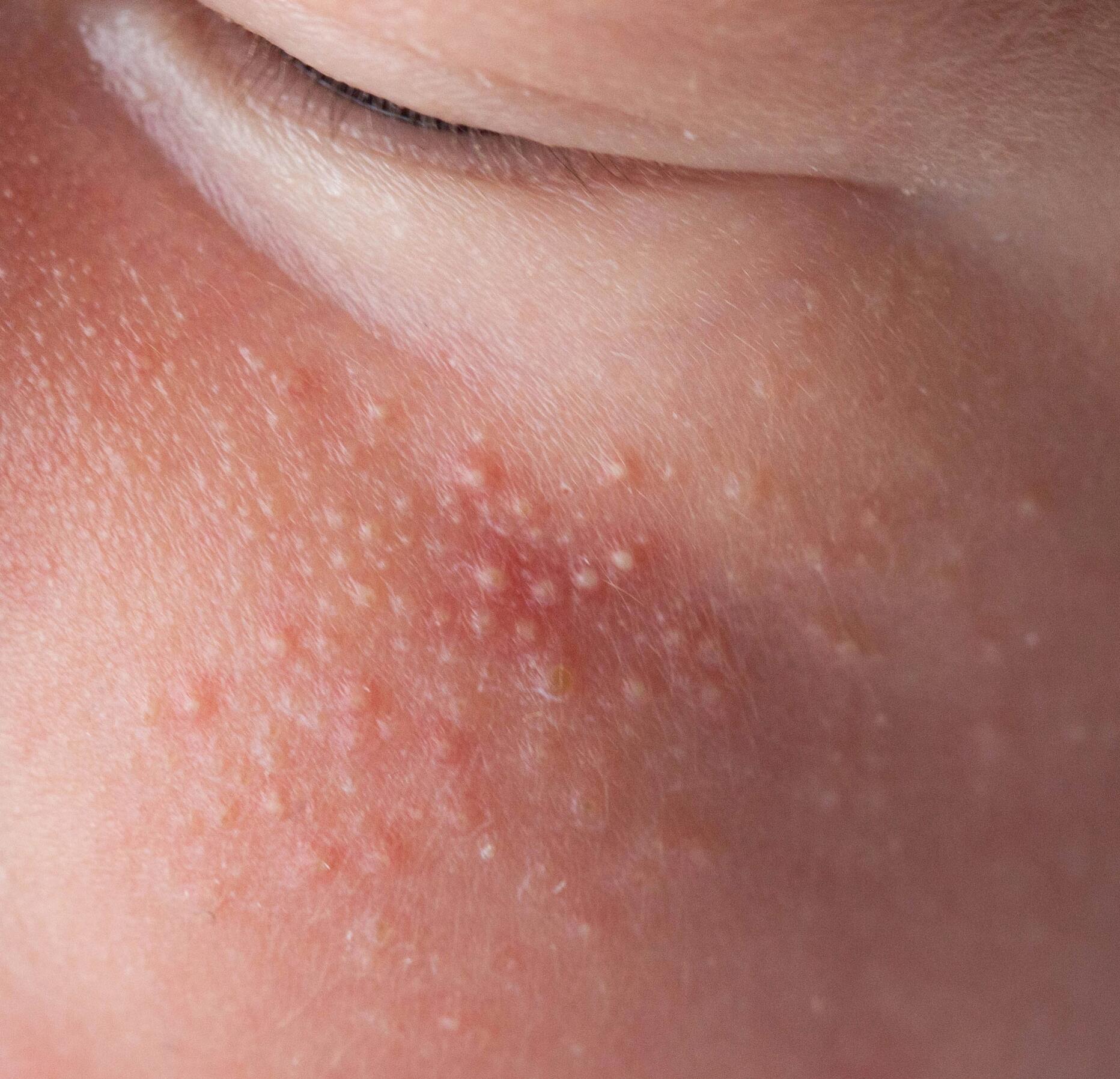
It manifests itself as small red or white spots, usually located on the cheeks, chin, forehead and sometimes even the eyelids.
Unlike teenage acne, acne in babies does not cause pain or discomfort and disappears spontaneously within a few weeks or months.
And the good news is that having baby acne does not increase the risk of developing acne as a teenager!
Symptoms and appearance of acne in babies
Here is what you may observe if your baby has neonatal acne:
- small red, pink or white spots (completely painless for your baby).
- These breakouts are concentrated on the face, particularly on oily areas such as the cheeks, chin or forehead, and sometimes on the scalp or upper chest.
In any case, neonatal acne does not leave scars, unlike certain forms of acne in adolescents or adults.
What causes neonatal acne?
Neonatal acne, or baby acne, is mainly caused by hormonal stimulation of the sebaceous glands.
Explanation: androgens, transmitted to the baby during pregnancy, promote excess sebum production, which can lead to acne in babies.
Contrary to popular belief, neonatal acne is not related to breastfeeding, breast milk, or the use of a specific infant formula. There is therefore no need to change the baby's meals.
However, applying cosmetics that are too oily can promote neonatal acne, so it is best to choose products that are suitable for their delicate skin.
What can I do about neonatal acne?
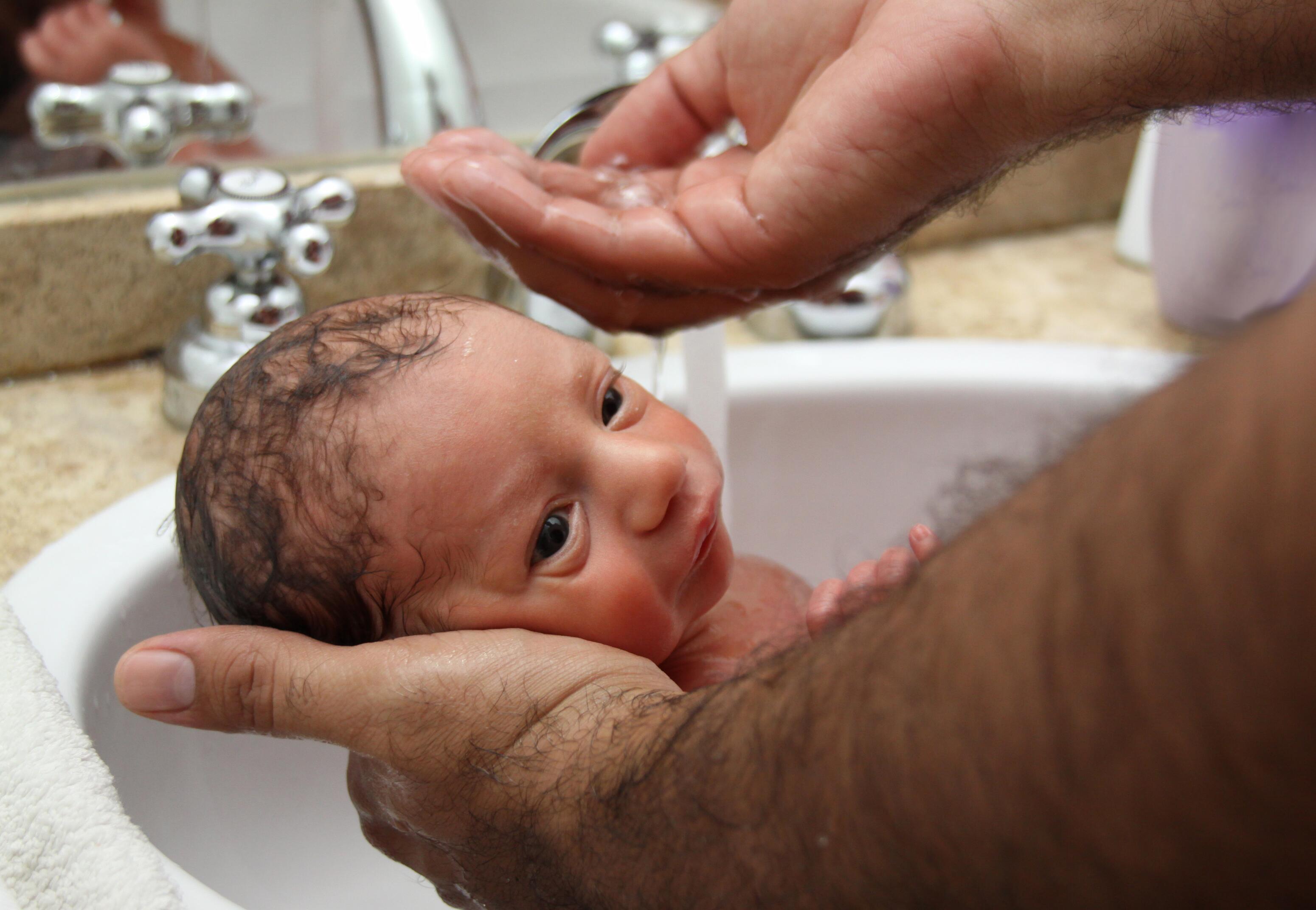
Baby acne usually clears up on its own. Baby acne therefore does not require any specific treatment. Adopting an appropriate skincare routine can nevertheless help manage and reduce lesions:
- Opt for gentle cleansing using a dermatological soap or an ultra-rich and soap-free cleansing gel that respects the skin's natural pH.
- Gently pat the skin dry.
- Do not touch the lesions or attempt to squeeze the spots, as this may cause secondary infections and/or scarring.
Consult with a doctor if acne lesions worsen, change in appearance, or persist for more than 6 months.
Conseils pour prévenir l'acné chez le bébé
Voici quelques conseils complémentaires pour prévenir l’acné chez le bébé :
- Utilisez des soins qui mentionnent bien être adaptés pour les bébés, sans ingrédients comédogènes, car la peau du nourrisson est fragile et immature.
- Nettoyez quotidiennement la peau de votre bébé, et toujours en douceur, pour ne pas créer d’irritation.Bas du formulaire
Sources :
(1) Schachner, L., Eichenfield, L., Andriessen, A., Benjamin, L., Cohen, B., Ghali, F., Gonzalez, M., Hebert, A., & Kwong, P. (2020). Consensus on Neonatal Through Preadolescent Acne.. Journal of drugs in dermatology : JDD, 19 6, 592-600.
Read also
- Discover Severe acne
What are the different types of acne?
Severe acne
- Discover Acne in women
What are the different types of acne?
Acne in women
- Discover Cystic acne
What are the different types of acne?
Cystic acne
- Discover Acne fulminans
What are the different types of acne?
Acne fulminans
- Discover Retentional acne
What are the different types of acne?
Retentional acne
- Discover Inflammatory acne
What are the different types of acne?
Inflammatory acne
- Discover Acne in men
What are the different types of acne?
Acne in men
- Discover Juvenile acne
What are the different types of acne?
Juvenile acne
Our targeted solutions for acne
Discover our complete range
- Anti-blemishes cleansing gel face and body
KERACNYL
Anti-blemishes cleansing gel face and bodyCleanses - Helps to get rid of imperfections - Anti-Blemish Cream
KERACNYL PP+
Anti-Blemish CreamAvoids skin marks - Helps to get rid of imperfections - Compensates for the effects of drying treatments


Our skincare routines
Oily or acne-prone skin
- Discover Anti-blemish face care summer routine for adult skin
Anti-blemish face care summer routine for adult skin
Do you have blemish-prone skin as an adult?