
Acne symptoms
- SUMMARY
- Acne
Acne on black skin: treatments and advice
- What can you do about acne on a daily basis?
- What soap should you use for acne?
- What kind of make-up should you use for acne?
- Acne and the sun
- Peels for acne
- Diet and acne
- Taking the pill to tackle acne
- Zinc to fight acne
- Acne and sport
- Masks to tackle acne
- The role of essential oils in treating acne
- Homeopathic remedies for acne
- Acne symptoms
- Spots on the buttocks (acne): how to get rid of them
- Facial acne: how to get rid of it
- Acne on the back
- Acne or rosacea?
- Acne spots: what are they?
- Blackheads: what are they?
- Acne spots on the lips: causes and solutions
- Whitehead
- Acne on the forehead
- Acne scars
- Acne on black skin: how to get rid of it
- Acne on the chin

Acne on black skin: treatments and advice
Updated on , approved by our DUCRAY medical experts.
Acne affects all skin types: it is a global dermatological condition, affecting approximately 9.4% of the population(1), mainly affecting teenagers, but also increasingly affecting adults. It manifests itself differently depending on skin type (fair or dark skin).
Black skin, which refers to skin rich in dark melanin (also called eumelanin), has specific physiological characteristics(2): a thicker skin barrier, a tendency towards post-inflammatory hyperpigmentation and sometimes higher sebum production. These specific characteristics influence not only the frequency of acne, but also its treatment and the risk of scarring.
Another challenge for dark skin types is diagnosis, as acne can sometimes be confused with other skin conditions.
So, what are the specific characteristics of black skin when it comes to acne? Which treatments should be prioritised? How can you prevent spots from appearing?
Find out more in this article.
The particularities of acne on black skin
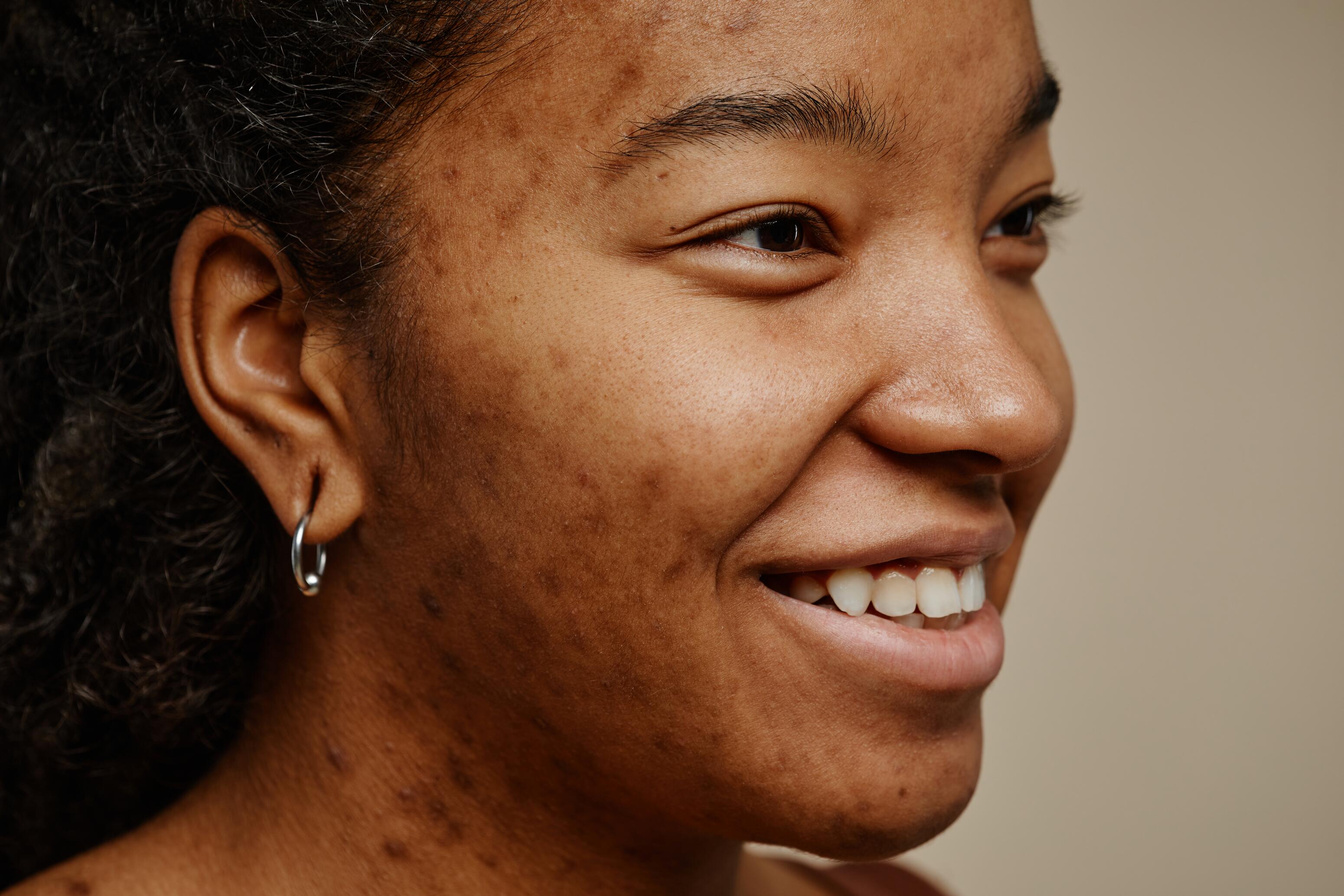
One of the main characteristics of acne on black skin is that it often leaves dark spots once the spots have disappeared. This phenomenon, known as post-inflammatory hyperpigmentation(2), is caused by increased production of melanin in response to the inflammation. Black skin naturally contains moreeumelanin, a brown-black pigment that offers better protection against UV rays(2) (equivalent to a natural SPF of 13.4, compared to 3.4 for fair skin). However, exposure to UV rays can also aggravate post-inflammatory hyperpigmentation: using sunscreen is therefore essential to prevent dark spots from becoming more pronounced.
Another characteristic of acne on black skin is the increased risk of thick scarring(2). On fair skin, acne often leaves pitted scars. However, on dark skin, the opposite is true: scars tend to be raised, with a higher risk of hypertrophic scars (thick raised scars that remain within the boundaries of the original lesion) and keloids (raised scars that extend beyond the affected area). This phenomenon is linked to more active skin repair and particularly reactive fibroblasts (cells responsible for healing), as well as excess collagen production in the skin. Result: a single spot on dark skin, if picked at or poorly treated, can leave a more noticeable mark than expected.
A third characteristic of acne on black skin is having skin that is both oily and dehydrated. The sebaceous glands in black skin tend to be larger and produce more sebum (the skin's natural oil), which can cause pores to become blocked and lead to acne. However, black skin is also more prone to dehydration due to greater water loss(2). The result: skin that may be oily on the surface but uncomfortable deep down, which complicates the choice of skincare products.
Finally, diagnosis is sometimes more difficult. Some common inflammatory conditions affecting black skin can be confused with acne: for example, folliculitis, which manifests as spot-like lesions but requires specific treatment.
These characteristics of acne on black skin confirm the importance of appropriate care, with treatments that take into account the risk of pigmentation spots and hypertrophic scars.
Is black skin more prone to acne?
The prevalence of acne on black skin is a subject of debate(1). However, some studies suggest that acne is more common in people with dark skin, particularly African-American and Hispanic women(3). What is certain is that acne does not manifest itself in the same way depending on skin type, and that complications vary(4).
That being said, is black skin more prone to acne? It appears that certain factors could play a significant role:
- Firstly, cosmetic habits: frequent use of oils, ointments and greasy creams to nourish the skin and hair can cause cosmetic acne (acne caused by greasy products blocking the pores). When applied to the hair, these products can migrate to the forehead or temples and cause acne spots.
- Climate also plays a major role in the frequency and intensity of acne(5). Heat and humidity stimulate the activity of the sebaceous glands, promoting excess sebum and clogged pores. Black skin, due to its adaptation to hot and humid climates, can sometimes encounter difficulties when exposed to colder and drier climates. Advice is therefore needed to adapt the skincare routine to the skin's needs.
- The indirect link between acne and the consumption of dairy products and foods with a high glycaemic index should also be taken into account. This dietary factor affects all skin types, of course, but eating habits vary across cultures and could influence the severity of acne.
Acne treatment for black skin
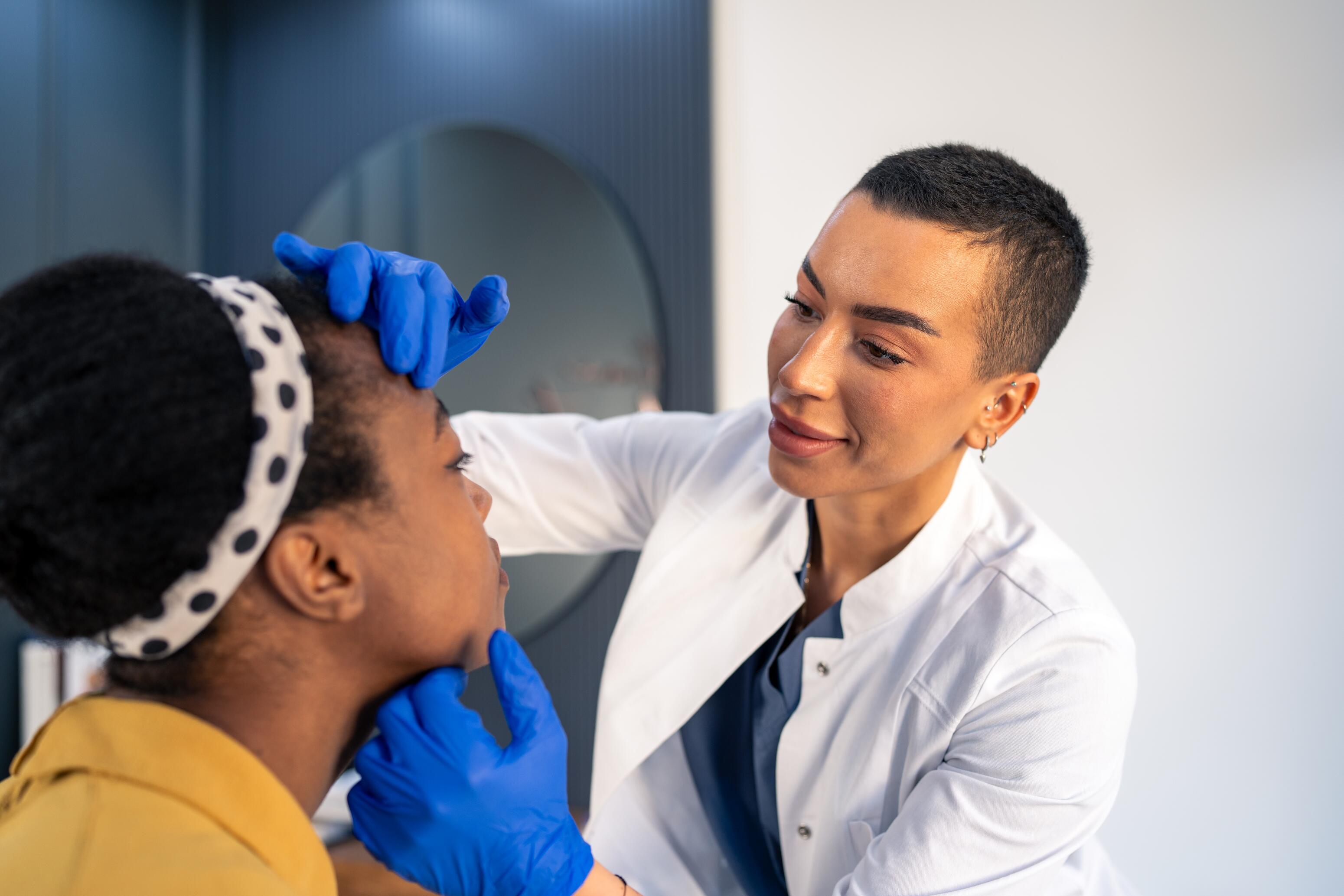
Acne on black skin requires appropriate treatment, particularly to prevent post-inflammatory hyperpigmentation and minimise the risk of hypertrophic or keloid scars. The aim is to treat acne on black skin while maintaining the skin's balance and avoiding irritation.
The dermatologist may prescribe creams containing(5):
- topical retinoids (in concentrations suitable for black skin) to help unclog pores and renew the skin.
- benzoyl peroxide, which combats the bacteria responsible for acne while limiting inflammation, but it must be used with caution to avoid irritation and hyperpigmentation.
- azelaic acid, which is an ideal choice for treating both acne and dark spots.
- antibiotics (sometimes oral), in cases of severe acne on black skin.
Hormone treatments for women suffering from hormonal acne may also be part of the management plan, depending on the situation.
Natural treatment for acne on black skin
Natural solutions can be an effective complement to improving skin condition:
- Green or white clay, applied as a mask once or twice a week, absorbs excess sebum and helps to purify the pores.
- Tea tree essential oil, known for its antibacterial properties, can be used topically (diluted in a non-comedogenic vegetable oil), taking care to follow the precautions for use. Always consult with your dermatologist before applying essential oils to the skin to avoid any risk of allergy or skin reaction.
- Zinc as a dietary supplement can also help regulate sebum production and reduce inflammation.
Preventing acne on black skin
To maintain healthy skin and prevent acne on black skin, gentleness is key!
It is best to avoid overly aggressive cleansers, which can disrupt the skin barrier and promote inflammation. Instead, opt for skincare products designed for blemish-prone skin, with non-comedogenic formulas that respect the skin's natural balance.
Attention should also be paid to hair products. Oils, ointments and greasy creams applied to the hair can migrate to the forehead and temples, clogging pores and triggering what is known as cosmetic acne. One more reason to choose light textures and be careful not to apply them too close to the face.
Sources :
(1) Alexis A, Tan J, Rocha M, Kerob D, Demessant A, Ly F, Wu Y, Sachdev M, Kurokawa I. Is Acne the Same Around the World? J Clin Aesthet Dermatol. 2024 Sep;17(9):16-22. PMID: 39263262; PMCID: PMC11386966.
(2) Alchorne MMA, Conceição KDC, Barraza LL, Milanez Morgado de Abreu MA. Dermatology in black skin. An Bras Dermatol. 2024 May-Jun;99(3):327-341. doi: 10.1016/j.abd.2023.10.001. Epub 2024 Feb 2. PMID: 38310012; PMCID: PMC11074564.
(3) Perkins AC, Cheng CE, Hillebrand GG, Miyamoto K, Kimball AB. Comparison of the epidemiology of acne vulgaris among Caucasian, Asian, Continental Indian and African American women. J Eur Acad Dermatol Venereol. 2011 Sep;25(9):1054-60. doi: 10.1111/j.1468-3083.2010.03919.x. Epub 2010 Nov 25. PMID: 21108671.
(4) Callender VD, Alexis AF, Daniels SR, Kawata AK, Burk CT, Wilcox TK, Taylor SC. Racial differences in clinical characteristics, perceptions and behaviors, and psychosocial impact of adult female acne. J Clin Aesthet Dermatol. 2014 Jul;7(7):19-31. PMID: 25053980; PMCID: PMC4106354.
(5) Pathmarajah P, Peterknecht E, Cheung K, Elyoussfi S, Muralidharan V, Bewley A. Acne Vulgaris in Skin of Color: A Systematic Review of the Effectiveness and Tolerability of Current Treatments. J Clin Aesthet Dermatol. 2022 Nov;15(11):43-68. PMID: 36381183; PMCID: PMC9651155.
Read also
- Discover Acne scars
Acne symptoms
Acne scars
- Discover Acne on the forehead
Acne symptoms
Acne on the forehead
- Discover Spots on the buttocks (acne): how to get rid of them
Acne symptoms
Spots on the buttocks (acne): how to get rid of them
- Discover Facial acne: how to get rid of it
Acne symptoms
Facial acne: how to get rid of it
- Discover Whiteheads: how to treat and get rid of them
Acne symptoms
Whiteheads: how to treat and get rid of them
- Discover Acne spots on the lips: causes and solutions
Acne symptoms
Acne spots on the lips: causes and solutions
- Discover Acne spots: what are they?
Acne symptoms
Acne spots: what are they?
- Discover Acne or rosacea?
Acne symptoms
Acne or rosacea?
- Discover Blackheads: what are they?
Acne symptoms
Blackheads: what are they?
- Discover Acne on the back
Acne symptoms
Acne on the back
Our targeted solutions for acne
Discover our complete range
- Anti-blemishes cleansing gel face and body
KERACNYL
Anti-blemishes cleansing gel face and bodyCleanses - Helps to get rid of imperfections - Anti-Blemish Cream
KERACNYL PP+
Anti-Blemish CreamAvoids skin marks - Helps to get rid of imperfections - Compensates for the effects of drying treatments


Our skincare routines
Oily or acne-prone skin
- Discover Anti-blemish face care summer routine for adult skin
Anti-blemish face care summer routine for adult skin
Do you have blemish-prone skin as an adult?