
Acne symptoms
- SUMMARY
- Acne
How to treat and eliminate whiteheads
- What can you do about acne on a daily basis?
- What soap should you use for acne?
- What kind of make-up should you use for acne?
- Acne and the sun
- Peels for acne
- Diet and acne
- Taking the pill to tackle acne
- Zinc to fight acne
- Acne and sport
- Masks to tackle acne
- The role of essential oils in treating acne
- Homeopathic remedies for acne
- Acne symptoms
- Spots on the buttocks (acne): how to get rid of them
- Facial acne: how to get rid of it
- Acne on the back
- Acne or rosacea?
- Acne spots: what are they?
- Blackheads: what are they?
- Acne spots on the lips: causes and solutions
- Whitehead
- Acne on the forehead
- Acne scars
- Acne on black skin: how to get rid of it
- Acne on the chin

How to treat and eliminate whiteheads
Updated on , approved by our DUCRAY medical experts.
In the case of acne, whiteheads, or closed comedones, are just as common as blackheads. These two types of acne spots are known as "retentional lesions", i.e. those that form when the pores of the skin become blocked.
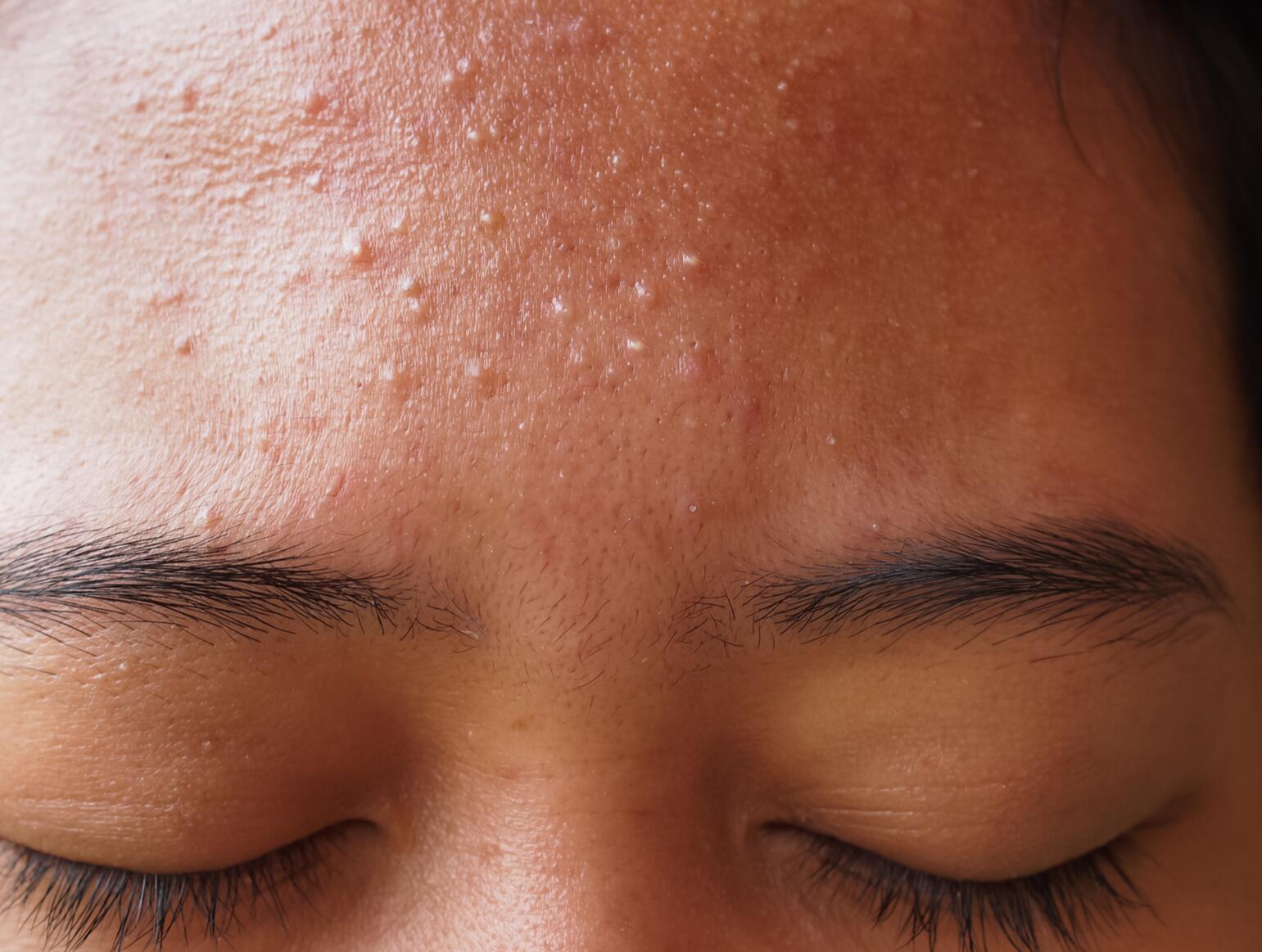
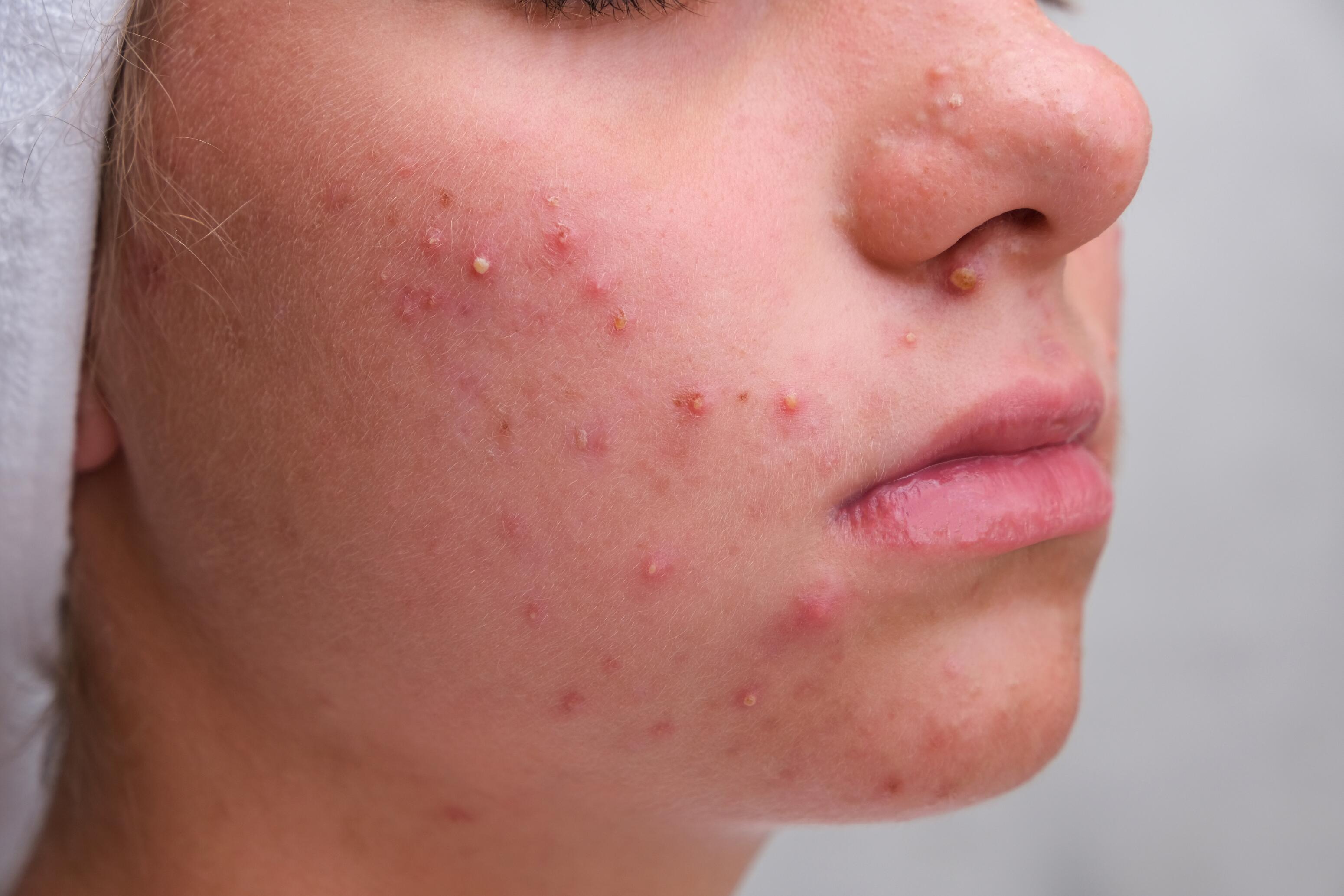
Also known as microcysts, whiteheads form beneath the surface of the skin, creating small bumps that are visible, perceptible to the touch, and give the skin an uneven appearance.
But why do these spots remain trapped under the skin while blackheads open up on the surface? Should they be squeezed or left to disappear naturally?
Find out everything you need to know about whiteheads (closed comedones) in this article.
What causes whiteheads?
Whiteheads are one of the first symptoms of acne. It all starts with a micro-comedone, an invisible lesion linked to excess and altered sebum, an imbalance in the skin's microbiota, dead cells and debris blocked inside a pore(1).
Over time, this micro-comedone may evolve:
- either into a blackhead, if the pore opens and its contents oxidise (turn black on contact with air).
- or into a whitehead, if the pore remains closed under a thin layer of skin cells.
This obstruction, in the case of whiteheads (closed comedones), prevents oxygen from penetrating, trapping keratin and sebum under the skin.
The presence of whiteheads on the face gives the skin an uneven appearance and a grainy feel to the touch.
How does a whitehead develop?
A whitehead, or closed comedone, can develop in various ways:
- It may disappear spontaneously if cell renewal is functioning properly and allows the sebum blockage to be absorbed naturally.
- It can open up and become a blackhead (open comedone).
- It can become inflamed, leading to the formation of papules or pustules (red spots with or without pus)(1).
In some cases, whiteheads can accumulate and form macrocomedones (lesions larger than 3 mm), requiring a specific dermatological extraction(2).
Whitehead on the face
Whiteheads mainly appear on areas where the skin has the most sebaceous glands, particularly on the face (forehead, nose, cheeks, chin) but also sometimes on the back and chest.
This accumulation of sebum and dead cells in the pores gives the skin a grainy, uneven appearance, which is very characteristic of whiteheads, or closed comedones.
How to treat a whitehead
To get rid of whiteheads and tackle retentional lesions (blackheads and whiteheads) more generally, use cosmetic products (purifying foaming gels, lotions, creams, anti-blemish serums, masks, etc.) rich in keratolytic active ingredients, such as glycolic acid, which will help unclog pores blocked by sebum and dead skin cells.
It is important to consult with a dermatologist to confirm the diagnosis and receive appropriate early treatment(3), and thus avoid a possible worsening of the acne.
What should you do when a whitehead appears? Should it be popped?
Unlike a blackhead, a whitehead (closed comedone) should not be squeezed.
There is no point in picking at them, as this may infect the acne whiteheads and leave scars.
However, the treatment prescribed by your doctor (based on retinoids(4) in particular) and daily skincare help to remove these whiteheads from the skin.
If these closed comedones persist despite local treatment, the dermatologist may suggest alternatives, such as:
- Medically supervised comedone extraction: this is considered for whiteheads (closed comedones) larger than 3 mm(2).
- Chemical peels.
- Laser treatments.
Sources :
(1) T., Zarkhin, S., Orringer, J., Nemeth, S., Hamilton, T., Sachs, D., Voorhees, J., & Kang, S. (2008). Computer-assisted alignment and tracking of acne lesions indicate that most inflammatory lesions arise from comedones and de novo.. Journal of the American Academy of Dermatology, 58 4, 603-8 .
(2) Kaya, T., Tursen, U., Kokturk, A., & Ikizoglu, G. (2003). An Effective Extraction Technique for the Treatment of Closed Macrocomedones. Dermatologic Surgery, 29, 741–744.
(3) Williams, H., Dellavalle, R., & Garner, S. (2012). Acne vulgaris. The Lancet, 379, 361-372.
(4) Gold, M., Baldwin, H., & Lin, T. (2018). Management of comedonal acne vulgaris with fixed‐combination topical therapy. Journal of Cosmetic Dermatology, 17, 227 - 231.
Read also
- Discover Acne on black skin: how to get rid of it
Acne symptoms
Acne on black skin: how to get rid of it
- Discover Acne scars
Acne symptoms
Acne scars
- Discover Acne on the forehead
Acne symptoms
Acne on the forehead
- Discover Spots on the buttocks (acne): how to get rid of them
Acne symptoms
Spots on the buttocks (acne): how to get rid of them
- Discover Facial acne: how to get rid of it
Acne symptoms
Facial acne: how to get rid of it
- Discover Acne spots on the lips: causes and solutions
Acne symptoms
Acne spots on the lips: causes and solutions
- Discover Acne spots: what are they?
Acne symptoms
Acne spots: what are they?
- Discover Acne or rosacea?
Acne symptoms
Acne or rosacea?
- Discover Blackheads: what are they?
Acne symptoms
Blackheads: what are they?
- Discover Acne on the back
Acne symptoms
Acne on the back
Our targeted solutions for acne
Discover our complete range
- Anti-blemishes cleansing gel face and body
KERACNYL
Anti-blemishes cleansing gel face and bodyCleanses - Helps to get rid of imperfections - Anti-Blemish Cream
KERACNYL PP+
Anti-Blemish CreamAvoids skin marks - Helps to get rid of imperfections - Compensates for the effects of drying treatments


Our skincare routines
Oily or acne-prone skin
- Discover Anti-blemish face care summer routine for adult skin
Anti-blemish face care summer routine for adult skin
Do you have blemish-prone skin as an adult?